Some reading there for you , Kijana … 
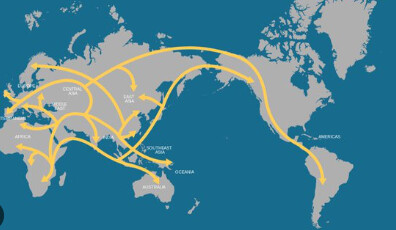
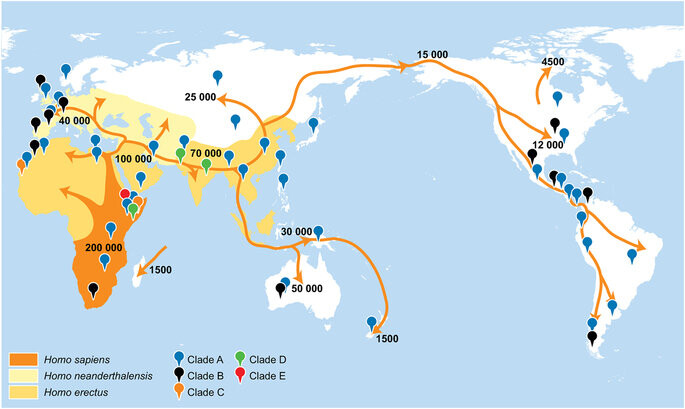
What we call Homo sapiens gradually began to emerge, most likely from Heidelbergensis ancestors within the rich territories of Africa, in either Africa’s southern or eastern reaches, by at least 200,000 years ago.
From Africa, members of the branch that is related to us modern humans formed migrated away from their homelands and into the Near East, where Homo sapiens burials have been uncovered at the sites of Skhul and Qafzeh in Israel, dated to between 90,000 and a staggering 130,000 years old, respectively.
Similarly, the site of Jebel Faya in the United Arab Emirates seems to show through the tools that were found there that Homo sapiens may have migrated here as early as 130,000 years ago, too. Even older migrations are not exactly unlikely, either, as fossils that appear to be Homo sapiens (although some alternatives have been suggested, too) found at Misliya Cave in Israel were recently found and dated to c. 180,000 years ago.
Far from there being one, singular big migration of one species to far-flung areas – which does not really make sense if you think about it, anyway – there appear to have been multiple instances of adventurous people moving about.
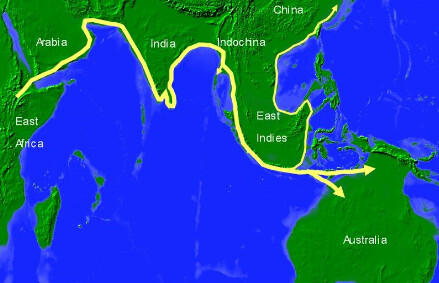
A recent study has shown that some of these early adventurers made it all the way to the island of Sumatra in western Indonesia between 73,000 and 63,000 years ago; this ties in well with other evidence that hints at humans reaching inner Southeast Asia some time before 60,000 years ago, and then following the retreating glaciers up towards the north.
There is even new evidence that places humans in the north of Australia by 65,000 years ago, seemingly also stemming from an early migration.