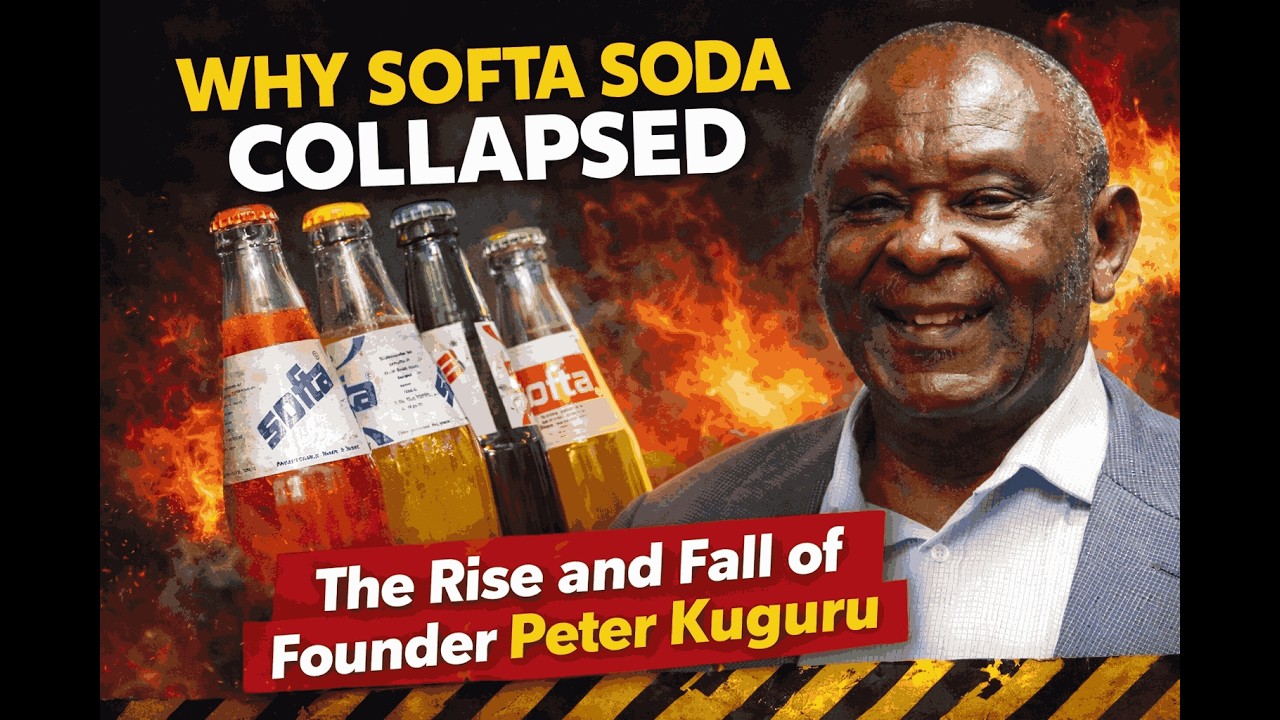
Softa Soda was once one of Kenya’s most recognizable homegrown soft drink brands — a true local challenger in a market dominated by global giants like Coca-Cola. At a time when Coca-Cola had deep pockets, massive distribution networks, and international brand power, Softa dared to compete with bold flavors, affordable pricing, and strong grassroots distribution across towns and estates.
Founded by Kenyan entrepreneur Peter Kuguru, Softa became a symbol of local enterprise and ambition. Kuguru built the company with the vision of creating a proudly Kenyan beverage brand that could stand toe-to-toe with multinational corporations. For years, Softa bottles — with their distinctive labels and bright colors — were a common sight in kiosks, shops, and social events across the country.
However, competing against Coca-Cola and other established players proved extremely difficult. Coca-Cola’s aggressive pricing strategies, powerful distribution channels, brand loyalty, and marketing muscle made survival tough for smaller manufacturers. As operational costs rose and competition intensified, Softa struggled to maintain its market share. Financial pressures, logistical challenges, and the harsh realities of the beverage industry eventually led to its decline.
The rise and fall of Softa Soda is more than just a business story — it is a powerful lesson about entrepreneurship in Kenya. It highlights the challenges local manufacturers face when competing with multinational corporations, the importance of capital and distribution networks, and the risks that come with scaling a business in a highly competitive industry.
Softa’s journey remains a reminder of both the ambition of Peter Kuguru and the unforgiving nature of the beverage market dominated by giants like Coca-Cola.
Methinks their low pricing did them in. Soda hio wakati was more of a status symbol than a refreshing drink. It was served at functions mostly na kwa wapendanao. “Kuja nikununulie soda” was a form of cock dance when “tuning” a nubile girl. So hakuna vile ungeita watu kwa harusi yako ama upeleke msichana wa wenyewe out only to buy them the cheapest soda you could lay your hands on.
Watu wa coca cola wlimuita kando,just like vile Unilever huiita competitors brands kando munaongea na bahasha kwa mkono then unaambiwa usiwai onekana ama kuskika tena,and just like that the deal is sealed.
Not really a pricing issue. Due to it’s cheap cost, distributors and their associates simply bought out all the product and hid it so the public never really found out about the product. Sure people remember Softa, but mostly because of the BOGO promotion. 600ml of soda @ 10 bob in the early 2000s.. guaranteed failure.
If someone buys out all my product, that should be a good thing. They can keep it all they want, a decent manufacturer will have several rounds availability. This cannot be a reason.
Soft drinks market is not that hard to crack. If you go to Europe or Asia or America, you will find several brands not produced by Coke or Pepsi. You will even find regional drinks, only available in certain parts of the country.
People are just scared in manufacturing. Soda is both production and branding. The bigger part is building a brand. How long you can hold with little sales while you promote your drink. That’s where you will pour your money.
Yes I missed that part. But, if a distributor buys all my drinks, my profit is more than the bottles. So that even if I have to purchase other bottles, I’m still winning.