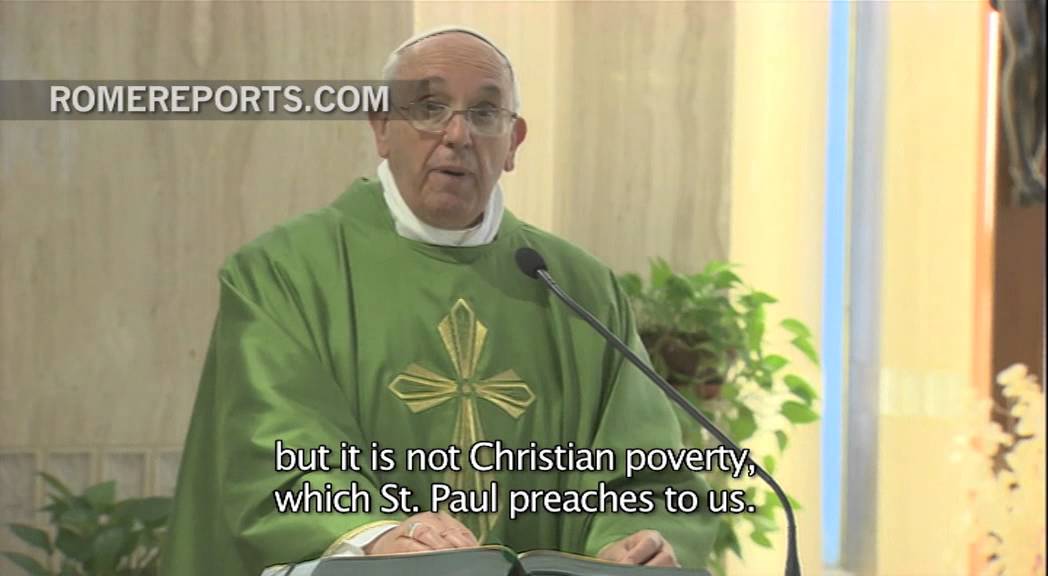
Ive always believed that Christian church doctrine directly encourages poverty, since theology tends to explicitly discourage wealth creation as part of devotion exercises. The poorer you are, the better for you since ‘Blessed are the poor’.. Muslims cannot believe anyone can follow scripture that actively encourages poverty.
Spiritual over practical focus — The New Testament emphasizes faith, charity, and humility, not profit-making or organizational efficiency. This leaves little guidance for financial strategy or market competition.
Suspicion of wealth — Many passages warn against greed and the corrupting influence of money, which can make believers hesitant to pursue profit aggressively.
Charity-driven mindset — Churches often prioritize giving and service over sustainability, which can undermine long-term business viability.
Lack of training — Clergy and church leaders are usually trained in theology, not economics, accounting, or management.
Consensus decision-making — Church governance often relies on committees and collective input, which slows down decisive business action.
Non-competitive ethos — The New Testament promotes cooperation and peace, while business often requires competition and assertiveness.
Reliance on faith over planning — Leaders may lean on prayer and providence rather than structured business models, risk assessments, or market analysis.
Resource allocation to ministry — Funds are directed toward spiritual missions, charity, and community support rather than reinvestment in growth.
Short-term generosity vs. long-term sustainability — Immediate acts of giving can drain reserves needed for stability and expansion.
Absence of explicit business instruction — Unlike ancient texts on governance or trade, the New Testament offers no systematic advice on contracts, investment, or management structures.
It’s not that church people cannot run businesses, but rather that their guiding text and culture emphasize values that often clash with the demands of commerce.
"The silver is mine, and the gold is mine, saith the LORD of hosts.” - Haggai 2:8
vs.
Dependence on God, not wealth — The message is that the spread of the gospel should rely on divine power and providence, not human resources. Poverty forces reliance on God rather than on material security.
Detachment from corruption — In the Roman world, wealth was often tied to exploitation, patronage, and imperial systems. By encouraging detachment from riches, Jesus was protecting his followers from being entangled in corrupt structures.
Credibility of the message — A poor, humble messenger was harder to accuse of self-interest. The apostles’ lack of wealth reinforced that they weren’t preaching for profit but for conviction.
Community support model — Instead of individual wealth, the early church emphasized communal sharing (Acts 2:44–45). This created a network of mutual aid that sustained the mission without reliance on personal riches.
Eschatological urgency — Many early Christians believed the end was near. In that mindset, accumulating wealth for long-term projects seemed irrelevant compared to preparing for God’s kingdom.
Wealth as distraction — Jesus warned that riches can choke spiritual growth (parable of the sower, Luke 8:14). Poverty was seen as a safeguard against divided loyalties.
If you use your gift of free will to pursue poverty, you will be poor. Which will lead you further into sin, because you begin rationalising actions you wouldn’t take if you weren’t so poor.
More proof of the domestic appeal of my religion i.e. women and children.
Poverty does not verify your Christianity. What the Bible warns against is the love of money. When money owns your heart instead of God.
Most Christians are unable to keep the idolatry aspect of money from interfering with their walk, so if you must choose which master to serve, better choose God than mammon.
Matthew 18:7-9 also applies to money if it causes you to sin.
Matthew 18:7. Woe to the world for the causes of sin. These stumbling blocks must come, but woe to the man through whom they come!
8If your hand or your foot causes you to sin, cut it off and throw it away. It is better for you to enter life crippled or lame than to have two hands and two feet and be thrown into the eternal fire. 9And if your eye causes you to sin, gouge it out and throw it away. It is better for you to enter life with one eye than to have two eyes and be thrown into the fire of hell.
Monks, friars, sisters, nuns and even priests take vows of poverty. People like St. Francis of Assisi denounced wealth and lived in complete poverty (even resorting to begging) despite being born into wealthy families.
I’m afraid so. After all Christ said it is harder for a rich man to enter heaven than for a camel to go through the eye of a needle. Ironically, the Catholic church is the wealthiest Christian church.
Prosperity and a heart aligned with Christ is the best combination. Just because someone is poor does not automatically make them good or humble. Infact many poor people are proud and evil. I’ve also met rich people with hearts of pure gold.