As digital transformation accelerates across East Africa, the demand for robust, scalable, and secure data infrastructure has never been more urgent. With a combined population exceeding 300 million across countries like Kenya, Tanzania, Uganda, Ethiopia, Rwanda, and others, the region is experiencing exponential growth in mobile connectivity, cloud adoption, fintech innovation, and e-government services. In this context, establishing a hyperscale data center—built to Facebook-level specifications—could serve as a transformative anchor for digital resilience and economic development.
Why Facebook-Level Specifications Matter
Facebook’s data centers are among the most advanced in the world, designed for high-density workloads, energy efficiency, and fault tolerance. These facilities typically feature:
- Modular data halls with scalable server racks
- Redundant power systems including backup generators and substations
- Advanced cooling infrastructure optimized for local climate conditions
- Tier IV security protocols with biometric access and perimeter surveillance
- Sustainable design incorporating renewable energy and water reclamation
Replicating this architecture in East Africa would not only future-proof the region’s digital backbone but also attract global cloud providers, content delivery networks, and enterprise clients seeking low-latency access to African markets.
Population-Driven Justification
East Africa’s population is young, mobile-first, and increasingly online. Kenya alone has over 50 million people, with smartphone penetration above 90% and mobile money usage among the highest globally. Ethiopia, with over 120 million citizens, is rapidly liberalizing its telecom sector. Uganda, Tanzania, and Rwanda are investing in digital ID systems, e-health platforms, and e-learning initiatives.
A centralized data center serving this population would reduce reliance on overseas hosting, lower latency for regional users, and improve data sovereignty. It would also support critical services such as:
- Disaster recovery and continuity for government and financial institutions
- AI and machine learning workloads for agriculture, health, and logistics
- Content caching and streaming for education, entertainment, and social media
- Secure cloud storage for SMEs, startups, and NGOs
Strategic Location and Topography
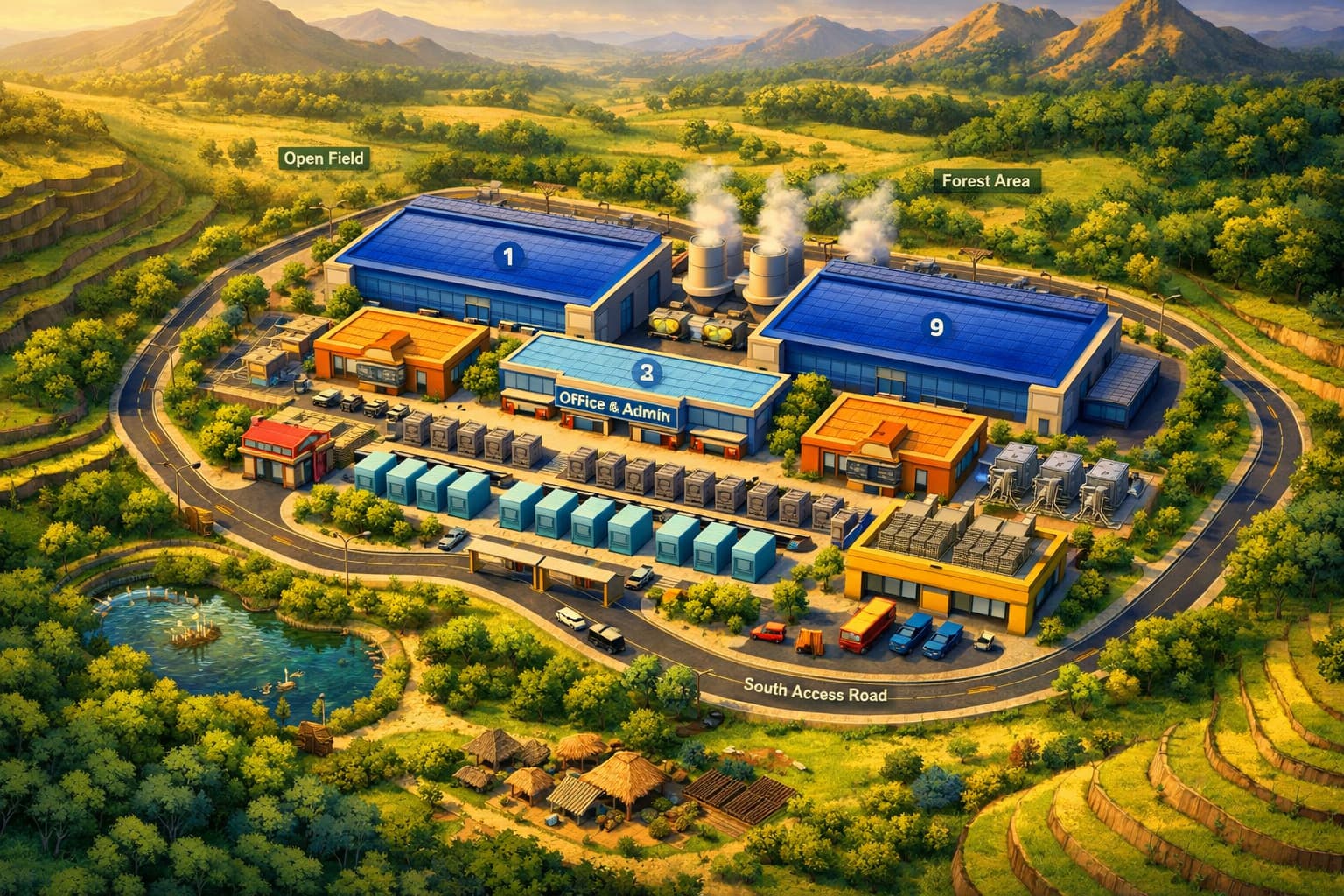
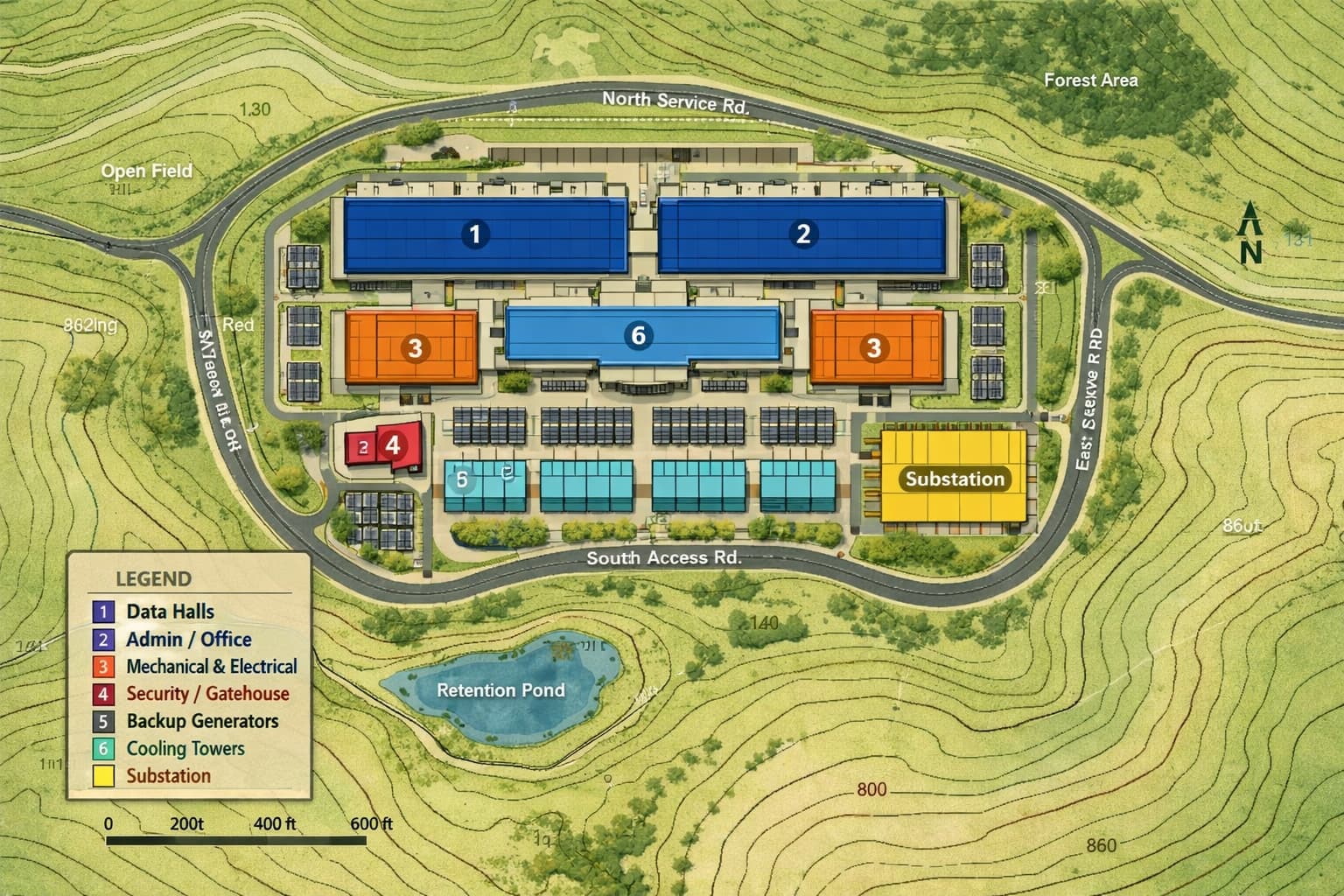
Nairobi, Kenya, stands out as a prime candidate for hosting such a facility. It offers political stability, fiber connectivity via undersea cables, and proximity to regional markets. The city’s elevation and temperate climate also support efficient cooling, reducing operational costs. A topographic layout—like the one rendered for this concept—would integrate the data center with surrounding infrastructure, including access roads, retention ponds, and forest buffers for environmental compliance.
Economic and Regulatory Considerations
While the upfront investment for a Facebook-grade data center is substantial—often exceeding $500 million—the long-term returns are compelling. Job creation spans construction, engineering, cybersecurity, and facility management. Local universities and technical institutes can partner for workforce development. Governments benefit from tax revenue, digital service expansion, and enhanced national security.
Regulatory alignment is key. Countries must harmonize data protection laws, cross-border data flow policies, and cloud service standards. The African Union’s Convention on Cybersecurity and Personal Data Protection offers a framework, but national implementation varies. A regional data center could catalyze policy convergence and set benchmarks for compliance.
Risks and Mitigation
Challenges include power reliability, political risk, and land acquisition. Mitigation strategies involve:
- Hybrid energy models combining grid, solar, and diesel backup
- Public-private partnerships to ensure stakeholder alignment
- Community engagement to address land use and environmental impact
Additionally, phased deployment—starting with a single data hall and scaling over time—can manage risk while demonstrating viability.
Conclusion
A Facebook-grade data center serving East Africa is not just a technological upgrade—it’s a strategic investment in the region’s digital future. By aligning infrastructure with population needs, regulatory frameworks, and environmental realities, such a facility could become a cornerstone of inclusive growth, innovation, and resilience. The time to build is now.