Timeline of Jewish Persecution and the looming World War III

The chronology depicts events that have befallen the Hebrews and then the Jews over the last few thousand years.

It is clear that when major events happened to the Jews, major changes often followed; these include major wars and geographical shifting of powers across regions.

It is increasingly evident that the developments are an indicator of a major war drawing near and a shifting of geographical powers on the horizon.

Which Countries or Regions in the chronology have been at the forefront of Jewish persecution, which ones are absent, and Why? Why?
:backhand_index_pointing_down:
c. 1500-1200 BCE: Israelites believed to have been enslaved in Egypt, led to the Exodus.

586 BCE: Jews were taken to Babylon after the conquest of Jerusalem - Babylonian Exile.

70 CE: Destruction of the Second Temple by the Romans, leading to Jewish displacement.

1096: First Crusade: Massacres of Jewish communities in cities like Worms and Mainz by the France/Germany.

1144: The murder of William of Norwich led to accusations against Jews, resulting in violence in England

1290: Expulsion of Jews from England by King Edward I.

1348-1351: During the Black Death, Jews were scapegoated and massacred, particularly in Germany and France.

1492: Jews Expelled from Spain; many flee to Portugal and other regions after the Alhambra Decree

1497: Expulsion of Jews from Portugal; forced conversions were common.

516: Establishment of the Venetian ghetto, the first official ghetto for Jews in Venice, Italy

1648-1657: The Khmelnytsky Uprising led to Massacres of Jews during the Cossack rebellion in Poland/Ukraine.

1881: Assassination of Tsar Alexander II leads to a wave of pogroms against Jews, particularly in Ukraine, Russia.

1903–1906: Russia: Pogroms intensify, especially in the Pale of Settlement, leading to mass Jewish emigration to the United States and Western Europe.

1914: Impact on Jewish communities across Europe, with many serving in armies and facing displacement during World War I.

1933 -1939: Hitler’s rise to Power, the Nazi Party ascends, beginning systematic anti-Semitic policies. Nuremberg Laws Legislation institutionalised racial discrimination against Jews in Germany.

1945: Systematic genocide resulting in the murder of approximately six million Jews across Europe in the Holocaust.

1950s: Large-scale migration of Jews to Israel and the United States, as anti-semitism persists: In various countries, including Eastern Europe.

2008: Gaza War: Operation Cast Lead, intensifying tensions in the Israeli-Palestinian conflict.
Ongoing conflict - Israel-Hamas conflict, and conflict involving Hezbollah.

2023: Anti-Semitic incidents are rising globally, including in Europe, the U.S., and elsewhere.
1 Like

Modern “Jews” kama akina Milekowsky are totally genetically different from biblical Jews.

3 Likes

Why does the world hate Jews?

Jews always try to form a state within a state, using their religion as the trojan horse, they form parrallel systems of governance, finance and major speculation on a nations resources.

Uliza tu Hitler kwa mein kampf atakushow kwa nini he adopted the Final Solution to the Jewish problem.

1 Like

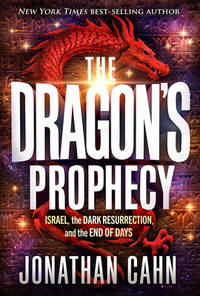
The answer is spiritual. Please find this book and meditate on it. I assure you will never, ever be the same person again.

1 Like

The accusation that they killed Christ put them in the crosshairs of Christians. Ukiangalia vizuri their conflict with Muslims is more recent, historically they’ve suffered more at the hands of Christians than Muslims.

1 Like

Because they killed Jesus, the Son of God.. by their own admission.

Not the first time an innocent man was killed by false prophets and demonic zealots for basically telling people to live in peace either.

1 Like

Mein Kampf is an incoherent, rambling mess written by an Austrian bastard boy. It doesn’t state anywhere the reasons for the final solution (i.e. gassing Jews using Zyklon B gas)

Summary of Mein Kampf by Adolf Hitler


Volume 1: A Reckoning (Published 1925)

  1. In the House of My Parents
    Hitler describes his childhood in Austria, his family, and early schooling. He speaks about his father’s strictness and his own early dislike of authority.

  2. Years of Study and Suffering in Vienna
    Hitler details his years in Vienna, where he lived in poverty and developed his antisemitic, anti-Marxist, and nationalist ideas. He blames Jews and Marxists for Austria’s problems.

  3. General Political Considerations Based on My Vienna Period
    He elaborates on his political ideas formed in Vienna—his disdain for democracy, liberalism, and Marxism. He begins to focus on the idea of race.

  4. Munich
    After moving to Munich, Hitler expresses his growing appreciation for Germany. He recounts how World War I impacted him and shaped his political views.

  5. The World War
    Hitler recounts his time as a soldier in WWI, praising the German military spirit and blaming Jews, Marxists, and traitors for Germany’s defeat.

  6. War Propaganda
    He criticizes German propaganda during WWI, praising British propaganda as more effective. He emphasizes the need for strong, emotionally driven messaging.

  7. The Revolution
    Hitler discusses Germany’s defeat and the 1918 Revolution. He blames communists and Jews for the downfall of the German Empire.

  8. The Beginning of My Political Activity
    Describes his entrance into politics and the founding of the German Workers’ Party (which would become the Nazi Party). He discusses his speaking abilities and propaganda tactics.

  9. The “German Workers’ Party”
    Details the growth of the Nazi Party. Hitler discusses the party’s principles—nationalism, antisemitism, and opposition to Marxism.

  10. Causes of the Collapse
    He identifies what he sees as the reasons for Germany’s collapse: racial impurity, Jewish influence, Marxism, and parliamentary democracy.

  11. Nation and Race
    A key ideological chapter. Hitler defines his concept of racial hierarchy, elevating the “Aryan” race and demonizing Jews. This forms the basis of Nazi racial ideology.

  12. The First Stage in the Development of the German National Socialist Workers’ Party
    He discusses the organization of the Nazi Party, its symbols (e.g., the swastika), and early political efforts.


Volume 2: The National Socialist Movement (Published 1926)

  1. Worldview and Party
    Hitler defines the Nazi worldview—based on racial purity and nationalism—and differentiates it from other ideologies.

  2. The State
    He elaborates on his ideal state: authoritarian, racially pure, and focused on the collective. Democracy is rejected.

  3. Citizens and Subjects of the State
    A distinction is made between citizens (racially pure Germans) and subjects (non-Germans or Jews).

  4. Personality and the Conception of the Folkish State
    Argues for leadership by strong, heroic individuals rather than elected officials.

  5. Philosophy and Organization
    Details how the Nazi Party should be structured and how it should indoctrinate followers.

  6. The Struggle of the Early Period – The Significance of the Spoken Word
    Describes the challenges faced by the early Nazi movement and stresses the importance of public speaking.

  7. The Struggle with the Red Front
    Focuses on violent clashes with communists (the “Red Front”) and the SA’s role as Nazi enforcers.

  8. The Strong Man is Mightiest Alone
    Praises the concept of the single, powerful leader—the Führer—who alone should guide the people.

  9. Basic Ideas Regarding the Meaning and Organization of the SA
    Discusses the role of the SA (Sturmabteilung or Storm Troopers) as the paramilitary arm of the Nazi Party.

  10. Federalism as a Mask
    Criticizes the federal structure of the Weimar Republic. Advocates for a centralized authoritarian state.

  11. Propaganda and Organization
    Outlines Nazi propaganda strategies—emotional appeal, repetition, and simplicity.

  12. The Trade-Union Question
    Hitler argues against traditional trade unions and proposes a state-controlled labor system.

  13. German Alliance Policy After the War
    Outlines Hitler’s foreign policy ideas: undo the Treaty of Versailles, expand eastward, and ally with Italy and Britain.

  14. The Eastern Orientation or Eastern Policy
    Calls for German expansion into Eastern Europe (Lebensraum) and the conquest of Russia.

  15. The Right of Emergency Defense
    Justifies violent action and rebellion as a legitimate defense of the nation.

TL;DR

Toka kwa chatGPT and give ur own opinion.

6 Likes

Main reason is because jews are natural back stabbers. Hawa watu allegiance yao ni wenyewe kwa wenyewe. They think other people are inferior. With such mindset hauwezi kusurvive na watu wengine.

1 Like

I’ve already given my opinion on this Nazi publication.

It’s shit.

Lots of tribes and communities around the world are like this. Jews seem specifically targeted because they are the only ones who explicitly use ‘Son of God’ in their religion.. whom they killed for absolutely no reason whatsoever.

A mistake in my view.

1 Like

You know its only jews who are supposed to believe in Judaism. So no other race can embrace Judaism religion except themselves. That isolation from others can easily make you a target. While other European interacted and intermarried with other races, jews avoided this. Hii itakufanya uchukiwe. Plus calling themselves god chosen iliharibu kila kitu.

1 Like

A Jew rabbi. Must watch.

1 Like

huyu akonashida ya kichwa and it was the king of Germany during those days that initiated the fall of Russian federation to stop the war in 1890’s

Mbona anaongea kama arab

1 Like

Jews have genetics as Arab. Hao with blue eyes are Caucasian who converted to Judaism. That’s why they banned DNA test to hide it’s fraud.

2 Likes

Kikuyus also call themselves Jews, and have a their myths about Gikuyu coming down from the mountain and other LSD based stories (ALL Bantus are from Congo forest).

So how most Kenyans feel about Kikuyus is how most whites feel about Jews.

Aside from the Holocaust part.

Kikuyus are not linked anywhere in the Bible. They were just like the rest of black sub saharan Africa who never knew how to read and write. The only known black jews were from Ethiopia.

Listen to @Straw_man explain.