Copied
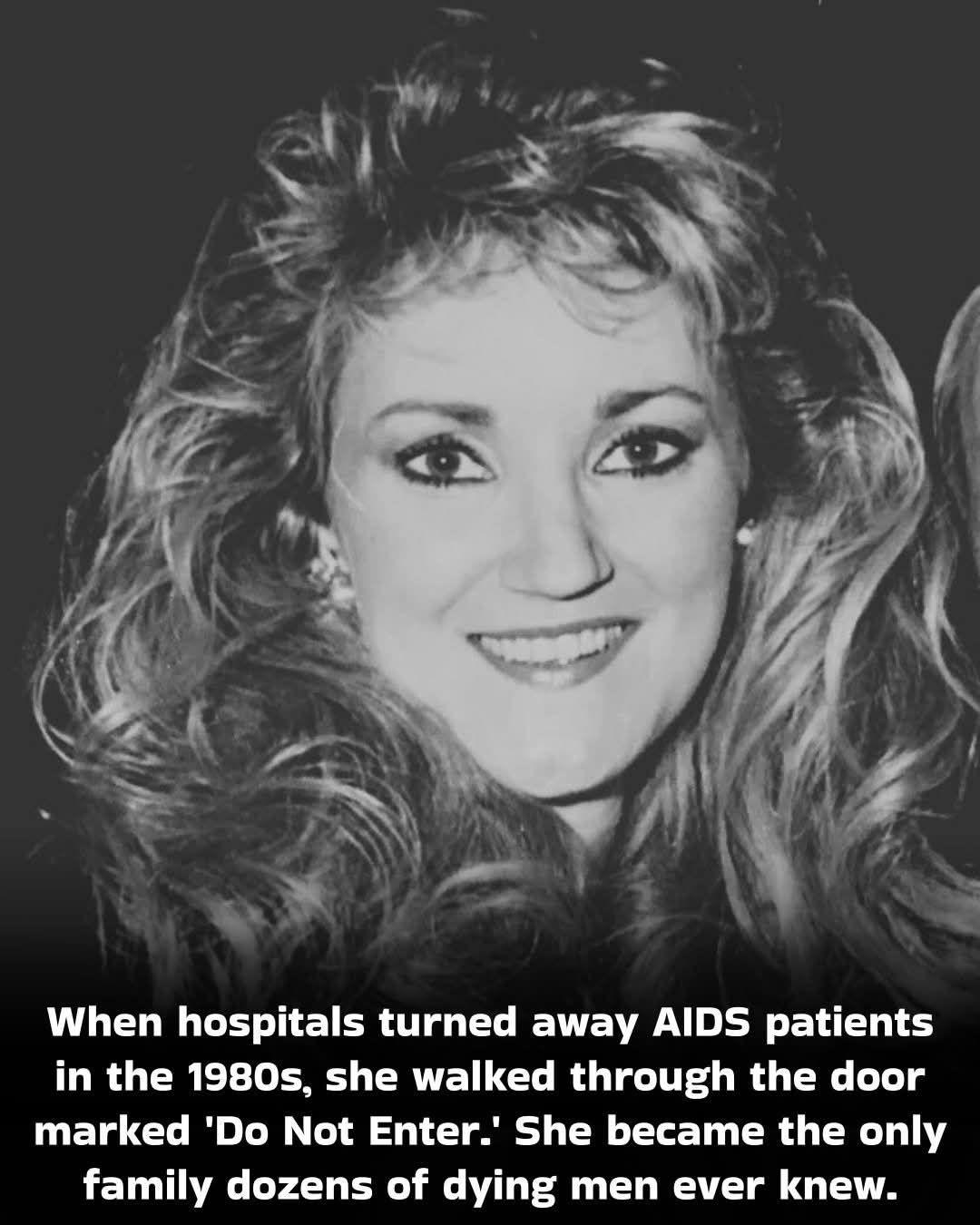
When hospitals turned away AIDS patients in the 1980s, she walked through the door marked ‘Do Not Enter.’
She became the only family dozens of dying men ever knew.
In 1984, the AIDS crisis was tearing through America—and nowhere was the fear more palpable than in small-town hospitals, where even healthcare workers refused to enter patients’ rooms.
Ruth Coker Burks was a young single mother from Hot Springs, Arkansas, visiting a friend at a hospital in Little Rock when she noticed something strange: a room with red tape across the door.
Nurses whispered warnings. Inside was “one of them”—a man with AIDS. No one would go in. No one would bring him food. No one would touch him.
Ruth did.
She walked through that door and found a young man—later known as “Jimmy”—skeletal, alone, terrified. He weighed less than 100 pounds. He was barely distinguishable from the white sheets on his bed.
He asked for his mother.
Ruth found a nurse and requested the mother’s phone number. The nurse looked at her like she’d lost her mind: “Honey, his mother is not coming. He’s been in that room for six weeks and nobody is coming.”
But Ruth called anyway.
The voice on the other end was cold: “He died to me when he turned homosexual.”
Then the line went dead.
Ruth returned to Jimmy’s room. She sat beside him. She held his hand—a hand no one else would touch, a hand his own mother had rejected.
For thirteen hours, she stayed. Until he took his last breath.
That moment changed her life.
Word spread through Arkansas’s small but terrified gay community: there was a woman in Hot Springs who would help. Who wasn’t afraid. Who wouldn’t turn people away.
More men came. Or rather, Ruth found them—in hospitals, abandoned by families who’d rather tell neighbors their sons were dead than admit they had AIDS.
Ruth Coker Burks became a one-woman AIDS support system in central Arkansas.
She had no medical training. No funding. No organization backing her.
Just a determination that no one should die alone.
She drove patients to appointments when no one else would transport them. She picked up medications from pharmacies—keeping supplies of AZT in her pantry because many local pharmacies refused to stock AIDS drugs.
She helped them fill out paperwork for assistance. She cooked for them. She sat with them through the fear and pain.
And when they died—when their families refused to claim their bodies—Ruth made sure they had a final resting place.
Her family had plots in Files Cemetery, a small historic cemetery in Hot Springs. According to Ruth, her mother had purchased numerous plots there after a family dispute.
Ruth used that land to bury men whose families wouldn’t take them home.
She worked with a funeral home in Pine Bluff for cremations. Then she and her young daughter would go to Files Cemetery with a post-hole digger and a small spade. They’d dig. They’d bury the ashes. They’d hold their own funeral service—because no priest or minister would officiate.
“My daughter had a little spade, and I had posthole diggers,” Ruth recalled. “I’d dig the hole, and she would help me. I’d bury them and we’d have a do-it-yourself funeral. I couldn’t get a priest or a preacher. No one would even say anything over their graves.”
The exact number of men she buried has been debated—Ruth has mentioned different figures over the years, from about two dozen to over forty. Records from that era are incomplete, and Ruth admits her memory of specific details has faded.
But what’s undisputed is this: Ruth Coker Burks buried men whose families rejected them. She gave them dignity in death when they’d been denied it in life.
The cost was high.
Her community shunned her. Her daughter was ostracized at school. On two occasions, crosses were burned in her yard by the Ku Klux Klan.
But gay bars in Arkansas rallied around her. Drag performers at places like the Discovery Club in Little Rock would organize fundraisers—“they would twirl up a drag show on Saturday night and here’d come the money”—to help Ruth pay for cremations and care.
Ruth never lost her faith. “I just lost faith in everyone else’s faith,” she said.
She worked tirelessly through the late 1980s and into the mid-1990s, until better HIV medications and more enlightened medical care began to change the landscape. By then, Ruth had cared for hundreds of people—though the exact number, like many details from that chaotic, heartbreaking era, remains unclear.
In 2010, Ruth had a stroke—which she partly attributed to the stress of those years. She had to relearn how to talk, feed herself, read, and write.
But she survived.
And decades later, her story began to resurface.
In 2015, the Arkansas Times profiled her as “The Cemetery Angel.” The story went viral. Suddenly, people around the world were learning about the woman who’d cared for dying men when no one else would.
She was honored by Broadway Sings for Pride. NPR interviewed her. CBS News featured her. Actress Rose McGowan directed a short film about her called “Ruth.”
In 2020, Ruth published a memoir, “All the Young Men.”
Her legacy is complicated—as many legacies are. Some details of her story have been questioned. Some numbers debated. Some claims disputed.
But the emotional truth at the core remains undeniable:
During one of the darkest chapters of American public health history, when fear and stigma killed as surely as the virus itself, Ruth Coker Burks showed up.
She walked into rooms others avoided. She touched hands others refused to hold. She buried men others pretended didn’t exist.
Paul Wineland, a Hot Springs resident who knew Ruth during the crisis, put it simply: “Here, we were pretty much left on our own. I had Ruth, and that was about it.”
That’s what matters. Not perfect records. Not exact numbers. But the fact that when people were dying alone, terrified, abandoned by everyone who should have loved them—Ruth was there.
She didn’t change laws. She didn’t end the stigma. She didn’t cure the disease.
She did something both simpler and harder:
She stayed when everyone else left.
When hospitals turned away AIDS patients in the 1980s, she walked through the door marked ‘Do Not Enter.’ She became the only family dozens of dying men ever knew.
They called her “The Cemetery Angel.” But Ruth never saw herself as one.
“They just needed someone,” she said. “And I was there.”
Sometimes that’s all it takes to change someone’s world—or to help them leave it with dignity.