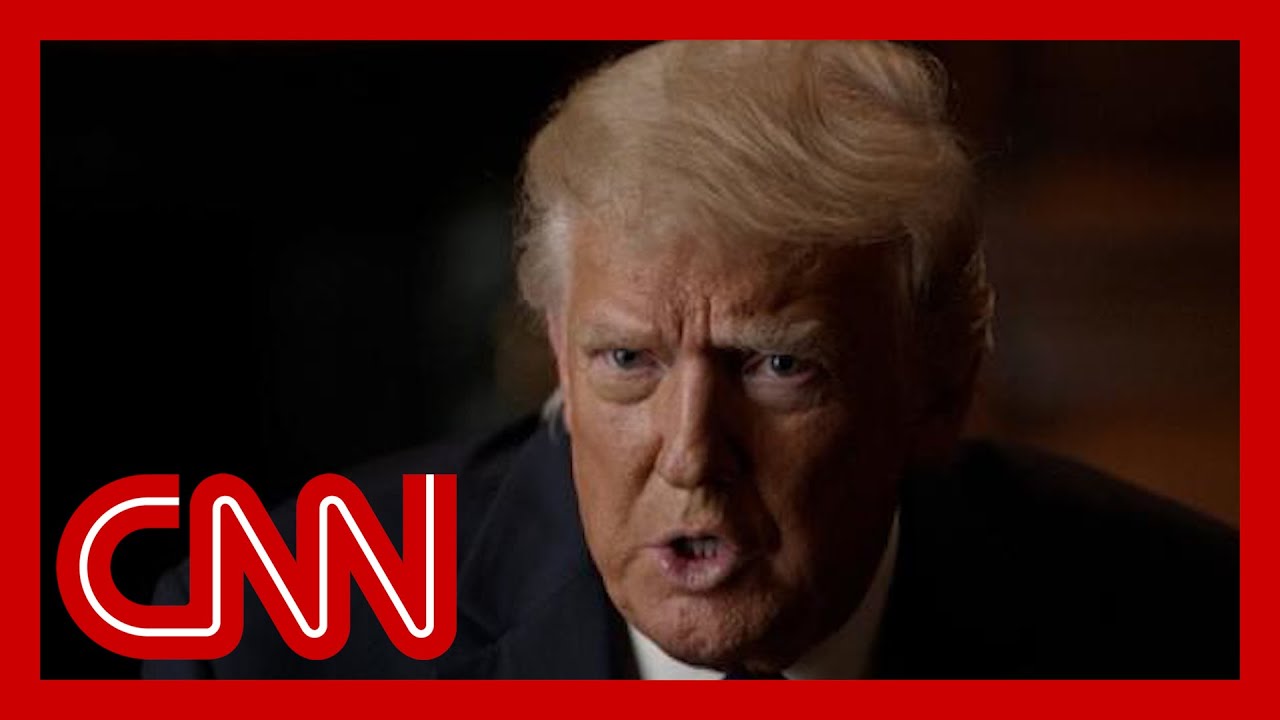
See Donald Trump talk about January 6 attack in never-before-seen footage

That’s very interesting. Now, the actual crimes.

President Trump was criminally indicted in federal court in Washington, D.C. in August 2023 in connection with the January 6 events and the broader effort to overturn the 2020 election. That indictment consisted of four criminal counts alleging misconduct tied to that period and actions surrounding certification of the electoral vote:

  • Conspiracy to defraud the United States (violating 18 U.S.C. § 371) — this charge alleges that Trump and others agreed to interfere with the lawful function of the government by spreading false claims of election fraud and obstructing the certification process.
  • Conspiracy to obstruct an official proceeding (18 U.S.C. § 1512(k)) — this is a key statutory basis prosecutors used to argue there was a plan to corruptly interfere with Congress’s certification of the Electoral College vote.
  • Obstruction of an official proceeding and aiding/abetting (18 U.S.C. § 1512(c)(2) and § 2) — this counts against anyone who “corruptly obstructs” a formal proceeding of the United States, here the joint session of Congress on January 6.
  • Conspiracy against rights (18 U.S.C. § 241) — alleges Trump and others conspired to interfere with the right of Americans to have their votes fairly counted.

Those were the specific criminal charges tied to January 6 and the effort to subvert the election, and they were part of what was known as United States v. Donald J. Trump in federal court in D.C.

However, critically relevant context:

  • After Trump won the 2024 election and was inaugurated in January 2025, the Department of Justice dismissed that federal criminal case under its policy of not prosecuting a sitting president. As a result, the four counts were dropped and are no longer actively prosecuting Trump at this time.
  • Courts and commentators have noted that this was an unprecedented situation — a former president charged for actions during his prior term, then the charges being dismissed due to his election and DOJ policy.

Current Situation:

Federal Jan 6 criminal charges:
• The federal criminal case charging Trump over January 6 and efforts to overturn the 2020 election — which included counts like conspiracy to defraud the United States, conspiracy to obstruct Congress, obstruction, and conspiracy against rights — was dismissed after he took office under the DOJ policy not to prosecute a sitting president. Those specific charges do not persist during his presidency. (This dismissal was the status as of when he assumed office earlier in 2025.)

What is ongoing or persists:

State‑level criminal cases
Georgia election interference case — After the special prosecutor in Fulton County (Georgia) charged Trump and others with state crimes tied to trying to overturn the 2020 election results there, that prosecution continues with a new prosecutor tapped and the case still active.
(Those charges were made under Georgia law and are independent of federal Jan 6 charges, so they don’t go away because of federal dismissal.)

Other criminal and civil cases (non‑Jan 6)
New York criminal charges (hush money) — A 34‑count indictment related to alleged hush‑money payments predating the 2016 election remains active and Trump has pleaded not guilty; that case was moving toward trial scheduling ongoing as of late 2025.

Federal classified documents case — Trump faced separate federal charges for alleged mishandling of classified documents at Mar‑a‑Lago. That prosecution was also paused when he assumed office and could be revived after his term.

Civil litigation and constitutional challenges
• There are ongoing civil lawsuits tied to January 6 — for example, Thompson v. Trump is a federal civil suit alleging Trump conspired to incite the Capitol attack. Civil cases aren’t criminal charges, but they continue in court even during his presidency.

• Separate civil and constitutional challenges remain active over Trump policies such as executive orders (for example on birthright citizenship and other actions) in federal courts.

@Nabii
Would you like to reduce some of these cases on behalf of the American, Y/N?

1 hour.

2025 Q4 (now – Dec 2025)

  • NY Hush Money (criminal, state) – Appeals filed; briefing schedules set.
  • Georgia Election Interference (state) – Case officially dropped; monitoring for potential refiling by a new prosecutor.
  • Federal Jan 6 / Classified Docs (federal) – Dormant during presidency; no active proceedings.
  • Civil Jan 6 Liability (Thompson v. Trump, federal) – Discovery complete or ongoing; pretrial motions underway.
  • NY Civil Fraud (Trump Org) – Appeals ongoing; deadlines for appellate briefs.

2026 Q1–Q4

  • NY Hush Money: Appellate court reviews briefs, holds hearings. Likely no final decision until late 2026.
  • Georgia Election Interference: Status quo; unlikely any action unless new prosecutor decides to refile.
  • Federal Jan 6 / Classified Docs: Still dormant; DOJ monitors developments.
  • Civil Jan 6 Liability: Case moves toward summary judgment or early trial scheduling. Potential limited discovery disputes.
  • NY Civil Fraud: Appellate court may issue ruling; could affirm, reverse, or remand for further proceedings.

2027 Q1–Q4

  • NY Hush Money: Appellate decision possible; if conviction upheld, potential for post‑term sentencing.
  • Georgia Election Interference: If refiling occurs (unlikely but possible), pretrial proceedings begin.
  • Federal Jan 6 / Classified Docs: Still dormant; statute of limitations slowly approaching but still valid.
  • Civil Jan 6 Liability: Trial or bench ruling likely; possible injunctions or damages awarded.
  • NY Civil Fraud: Appellate decision implemented; potential enforcement of financial penalties post‑term.

2028 Q1–Q4

  • NY Hush Money: Any sentencing, fines, or probation applied after presidency. Appeals may continue.
  • Georgia Election Interference: If case exists, likely motions for trial preparation. Otherwise dormant.
  • Federal Jan 6 / Classified Docs: DOJ may file new indictments post‑term; pretrial phase begins if so.
  • Civil Jan 6 Liability: Appeal likely after trial verdict. Damages may be delayed due to appeals.
  • NY Civil Fraud: Enforcement of monetary penalties; compliance orders for Trump Org.

2029 Q1–Q4 (post-presidency)

  • NY Hush Money: Final appeals resolve; verdict and sentence finalized.
  • Georgia Election Interference: Could resume prosecution if refiling occurred; trial or plea possible.
  • Federal Jan 6 / Classified Docs: If DOJ filed new charges post‑term, pretrial, motions, or trial may occur.
  • Civil Jan 6 Liability: Enforcement of damages/injunctions; appeals resolved.
  • NY Civil Fraud: Final financial penalties and compliance orders executed.

Key Observations:

  1. Most active resolution likely post‑2025 once he leaves office.
  2. Civil cases (Jan 6, NY fraud) may reach judgment during his term, but enforcement can be delayed.
  3. Federal Jan 6 and classified documents cases are effectively on pause until he is out of office.
  4. NY Hush Money appeals are slow, complex, and could extend several years.

50 minutes.

@rexxsimba Are you familiar with what actually happened to Cuba’s economy?

1 Like

Court Strategy Per Case

1. Manhattan “Hush Money” criminal case
A defense approach would center on intent. New York has to prove the records weren’t simply incorrect, but knowingly falsified to conceal another crime. If the defense can pull the focus back to routine corporate ambiguity, and challenge witness credibility, the prosecution’s ladder gets wobbly.

2. Federal Classified Documents criminal case
Strategy here would emphasize procedural and bureaucratic complexity: classification rules, storage practices, document-handling protocols, chain of custody, and search procedures. Framing the situation as disorganization rather than willful obstruction could be a path, especially if intent is unclear.

3. Georgia 2020 Election criminal case
The racketeering angle depends on showing a coordinated criminal enterprise. A defense would try to dismantle that idea by treating events as disjointed political activity rather than a unified scheme. Free speech arguments—distinguishing political pressure from criminal coercion—would likely be central.

4. Federal Jan. 6 election subversion criminal case
Here the critical question is whether contesting the election crossed into illegal obstruction or conspiracy. A defense strategy would focus on the mental element: that Trump believed the election was flawed and pursued what he thought were lawful avenues. Constitutional arguments about presidential authority would also be key.

5. E. Jean Carroll civil matters
These hinge on statements and reputational harm. With liability largely established, remaining defense aims would be to minimize damages. Arguments might stress that political speech is often harsh and interpretive, and that demonstrating measurable harm is complicated.

6. New York civil fraud case
This is all about asset valuations. A defense approach would latch onto the subjectivity of valuation in real estate—numbers shift with assumptions, markets, and negotiation. If lenders weren’t actually harmed, remedies become harder to justify.

A future investment @rexxsimba. There’s more to realpolitik than social matters and woishe woishe narratives.

This is POTUS.

Case / Proceeding Presiding Judge Court Appointing Authority / Affiliation Facts Estimated View (Non-Official)
1. New York “Hush Money” (criminal) Juan M. Merchan New York Supreme Court (Manhattan) Appointed within NY state system; donated small amounts to Democratic-aligned causes. Estimated View: Leaning liberal / Democratic-aligned background based on donations.
2. New York Civil Fraud (Trump Org) Arthur F. Engoron New York Supreme Court (First Judicial District) Officially listed party affiliation: Democratic. Estimated View: Liberal / Democratic-aligned (explicit party designation).
3. Georgia Election Interference (state criminal — dismissed) Scott F. McAfee Fulton County Superior Court (Georgia) Appointed by Republican Gov. Brian Kemp; legal background includes Federalist Society involvement and Republican-oriented law groups in law school. Estimated View: Conservative-leaning / Republican-aligned background.
4. Federal Jan 6 Election Obstruction (federal criminal — dismissed) Tanya S. Chutkan U.S. District Court for the District of Columbia Appointed by President Barack Obama (Democratic). Estimated View: Liberal / Democratic-aligned based on appointing president.
5. Federal Classified Documents (federal criminal — dismissed) Aileen M. Cannon U.S. District Court for the Southern District of Florida Appointed by President Donald Trump (Republican). Estimated View: Conservative / Republican-aligned (appointed by Trump).
6. Thompson v. Trump (civil Jan 6 liability) Amit P. Mehta U.S. District Court for the District of Columbia Appointed by President Barack Obama (Democratic). Estimated View: Liberal / Democratic-aligned based on appointing president.

Notes on Estimated Views:

  • These estimates aren’t official party registrations or reliable predictors of rulings; they are inferences based on who nominated or appointed the judge, documented affiliations, and public actions.
  • Federal judges (Chutkan, Mehta, Cannon) are lifetime appointees whose confirmations were subject to Senate approval. Judges appointed by Democratic presidents tend statistically toward interpretations aligned with liberal legal philosophies; those appointed by Republican presidents, toward conservative ones.
  • State judges like Merchan and McAfee may have nonpartisan ballots but their appointment history, affiliations, and biographical details provide reasonable contextual cues about legal background.

Key details from sources:

  • Juan Merchan has a long state judicial career and has contributed modestly to Democratic causes in the past.
  • Arthur Engoron is explicitly identified with the Democratic Party on official profiles.
  • Scott McAfee was appointed by a Republican governor and has conservative legal group ties from his earlier years.
  • Tanya Chutkan and Amit Mehta were both appointed by President Obama, consistent with liberal-aligned judicial philosophy trends.
  • Aileen Cannon was appointed to the federal bench by President Trump.

@rexxsimba Am I overcompensating here?

1. New York Civil Fraud Case (State civil lawsuit) – New York v. Trump et al.
Presiding Judge (trial): Arthur F. Engoron — Supreme Court of the State of New York, New York County (Manhattan) — civil division.
This was the major civil fraud lawsuit brought by New York Attorney General Letitia James under New York Executive Law § 63(12), alleging that Trump, his children, and Trump Organization entities fraudulently overstated asset values on financial statements used with lenders and insurers over many years. The judge found that the defendants had engaged in persistent and repeated fraud, falsifying various financial statements and misrepresenting valuations to secure loans and insurance on favorable terms.

Judge Engoron’s ruling included significant monetary penalties, a ban on serving as officers or directors of New York corporations for certain periods, and restrictions on applying for loans in New York. However, in August 2025, an appeals court (Appellate Division of the NY Supreme Court) overturned the massive monetary penalty (roughly $454 million) as an excessive fine under the U.S. Constitution, while upholding the underlying finding of fraud and other non-monetary sanctions. The Attorney General’s office has signaled it intends to seek review by the New York Court of Appeals (the state’s highest court).

Current posture:

  • Underlying fraud findings remain intact at the appellate level.
  • The huge civil financial penalty has been voided pending further appellate review.
  • Non-monetary sanctions (restrictions on business conduct) were upheld by the appellate panel and remain in effect (subject to further appeal).

2. New York Criminal Case (Manhattan hush money case — People v. Trump)
Presiding Judge: Juan M. Merchan — Supreme Court of the State of New York (Manhattan, criminal division).
This is distinct from the Joseph civil business fraud action above. In this criminal fraud-linked prosecution, Trump was charged with 34 felony counts of falsifying business records under New York Penal Law (first degree) for records related to reimbursements tied to payments made during the 2016 election cycle. A jury found him guilty on all counts in May 2024, and Judge Merchan later imposed no traditional sentence (unconditional discharge) due to unique constitutional issues about incarcerating a president-elect. He still carries the conviction and is appealing.


Updated Table for These Fraud Cases

Case Court Presiding Judge Judicial Appointing Authority Recent Status Notes
NY Civil Fraud (business valuations) Supreme Court of NY, New York County (civil) Arthur F. Engoron State judge (Democratic‐leaning designation on record) Fraud finding upheld; penalty voided by appeals court AG James likely to seek review at NY Court of Appeals; underlying fraud finding remains.
NY Criminal Hush Money (falsifying business records) Supreme Court of NY, New York County (criminal) Juan M. Merchan State judge (background includes modest Democratic‐aligned contributions) Guilty verdict; unconditional discharge (no jail/fine) Conviction stands; being appealed.

A few key points that clarify the fraud terrain:

  • The civil fraud case is not a criminal prosecution — it’s a civil enforcement action under state law alleging misrepresentation and deceptive financial practices. The judge sitting was Arthur Engoron, and even though an appeals court threw out the penalty, the fraud finding itself hasn’t been reversed. That matters because the case can still return to the appellate process and even the state’s highest court for final resolution.
  • The criminal charge of falsifying business records (34 counts) is a separate state criminal case handled by Judge Merchan; it resulted in a conviction, but the sentence imposed was an unconditional discharge without punitive measures like imprisonment or fines due to the defendant’s status as president-elect.
  • Both cases are in New York state courts, not federal courts, and each follows its own appellate ladder (civil appeals in the Appellate Division → New York Court of Appeals; criminal appeals in the NY state appellate system).

@rexxsimba You did say you’re familiar with common law.

A lot of money to spend on a loser lawfirm. Idiot.

Fill in the blanks @rexxsimba

17_

ALL USELESS

Donald Trump’s Key Lawyers (Current / Recent)

Lawyer Role(s) Party Affiliation (Estimated) Win/Loss Track Record (Qualifier) Performance Rating (★/5)
Christopher “Chris” Kise Lead counsel on NY civil fraud; represented Trump in classified docs case Republican (served as Florida Solicitor General under GOP) Major loss in civil fraud trial (judgment against Trump upheld, penalties imposed, though on appeal); ongoing aggressive defense strategy ★★☆☆☆ (2/5)
Alina Habba Key counsel on multiple civil matters (civil fraud, E. Jean Carroll cases) Republican Multiple high-profile losses (civil judgments against Trump in E. Jean Carroll and civil fraud); appellate strategies long-running ★★☆☆☆ (2/5)
Todd Blanche Defense lead in Manhattan criminal case; also appeared in classified docs defense Republican (registered 2024; former Democrat) Trial resulted in criminal conviction (NY); appeals ongoing; chose to take on high-risk case ★★☆☆☆ (2/5)
John F. Lauro Lead federal criminal defense (election subversion/Jan 6) Republican-leaning (former federal prosecutor) Case dormant/paused (federal charges dismissed while president in office); limited wins yet ★★★☆☆ (3/5)
Steven H. Sadow Lead counsel in Georgia racketeering/election case Independent / lean conservative (solo criminal defense) Case dismissed; strategy ended without conviction but did not produce acquittal — ambiguous outcome ★★★☆☆ (3/5)
Harmeet Dhillon Esq. in ballot eligibility and 14th Amendment defenses; campaign-related litigation Republican (party activist & litigator) Mixed wins/losses; some Supreme Court stage appearances; not all outcomes favorable ★★★☆☆ (3/5)
Evan Corcoran Former counsel in classified docs investigation (withdrew) Independent Republican-aligned Complicated outcome; withdrew from case after conflict over privilege — not a clear win ★★☆☆☆ (2/5)
Michael van der Veen Represented Trump in 2nd impeachment (acquittal) Republican-aligned defense attorney Successful defense in impeachment → acquittal; though not on current core cases ★★★★☆ (4/5)

How to Interpret These Ratings

Party Affiliation:
• Republicans or Republican-aligned: Kise, Habba, Blanche, Dhillon, Lauro (former federal prosecutor, typically GOP aligned)
• Independent/conservative lean: Sadow, Corcoran
• Van der Veen: generally viewed as Republican-aligned on high-profile defense work

Win/Loss Track Record (Qualitative):
Courts do not publish a crisp win/loss ledger for attorneys, but we can infer from major case outcomes:

  • Losses include Trump’s major civil judgments (NY civil fraud, E. Jean Carroll verdicts, criminal conviction in Manhattan), which weighed heavily on Kise’s and Habba’s portfolios.
  • Neutral / ongoing includes Lauro (federal Jan 6 cases paused) and Sadow (case dismissed rather than acquittal).
  • Clear win (single high stakes) is van der Veen in the second impeachment acquittal.

Performance Ratings (Subjective but grounded):
★☆☆☆☆
— “Struggles to achieve favorable outcomes in major trials, with several significant losses.”
★★☆☆☆
— “Mixed outcomes; wins hard to identify in headline cases; substantial challenges.”
★★★☆☆
— “Balanced track with some procedural or partial strategic success but no definitive wins yet.”
★★★★☆
— “Strong record in major defense context (e.g., impeachment acquittal).”


Additional Context

• Legal representation quality isn’t just outcomes — it’s also strategy, appellate positioning, courtroom command, and managing client choices. Trump’s cases have been unusually complex, involving presidential immunity arguments, appeals, and venue battles.

• Many cases have ongoing appeals, so ratings could shift as appellate courts weigh in.

• Lawyers like van der Veen are rated higher largely because of demonstrated success in extremely high-stakes contexts (impeachment acquittal), even if they’re not at the center of current core Trump criminal cases.

• Some attorneys (e.g., Corcoran) exited cases under pressure, which isn’t a pure performance loss but complicates the record.

Lose some more, ambulance-chasing f*cks.

TRUMP ORGANISATION TAX CASES

1. Criminal Tax Fraud Conviction — Trump Organization (NYC)
This is the clearest tax-specific case that has concluded in criminal court.

What happened: In July 2021, a Manhattan grand jury indicted two subsidiaries of the Trump Organization (The Trump Corporation and Trump Payroll Corporation) and longtime CFO Allen Weisselberg on multiple counts including tax fraud, conspiracy, and falsifying business records. Prosecutors alleged a long-running scheme to compensate executives “off the books” so they and the company avoided paying taxes on those benefits. (TIME)

Outcome: In December 2022 a jury in New York State Supreme Court (Manhattan) found both entities guilty on 17 criminal counts tied to the tax scheme, including fraud and falsification related to executive compensation. A fine of up to $1.6 million was imposed — the maximum permitted under the applicable state law. (cnbc.com)

Important nuance: This was a corporate criminal conviction of business entities, not a conviction of Donald Trump personally. Trump himself was not charged in that trial; prosecutors focused on the company and the longtime CFO Weisselberg. (cnbc.com)

So:
What it was: Corporate tax fraud scheme involving undeclared executive compensation. (TIME)
Who was convicted: Trump Organization corporate entities and, separately, Weisselberg (who pled guilty). (cnbc.com)
Why it matters: Although Trump wasn’t personally indicted here, this remains a landmark corporate conviction against his real-estate empire. (cnbc.com)

2. Tax-Related Civil Fraud Claims — New York v. Trump & Trump Organization
This is not literally a tax crime prosecution, but it touches on taxes because it grows out of allegations that Trump provided inaccurate financial data to lenders and insurers, and allegedly also manipulated valuations that could affect tax obligations.

What it was: The New York Attorney General’s civil lawsuit alleged that Trump and his organization repeatedly misrepresented asset values over many years, including for purposes that affected tax valuations and financial statements used for loans. (Wikipedia)

Outcome: In early trial proceedings, the trial court (Justice Arthur Engoron in New York Supreme Court, Manhattan) found liability and imposed massive penalties. But in August 2025, the Appellate Division of the New York Supreme Court voided the civil penalty (about $500 million) as “excessive” — while upholding the fraud finding itself. (Reuters)

So:
What it was: Civil lawsuit alleging widespread financial misrepresentation affecting lenders and insurers (including valuation that could influence tax assessments). (Wikipedia)
Outcome: Fraud finding upheld but the financial penalty was overturned on appeal, and some restrictions remain; further appellate review is expected. (Reuters)

This belongs in a broader set of fraud cases that intersect with tax reporting errors and valuation disputes.

3. Historical Tax Audits and Disputes (Civil / Administrative)
Long before the 2020s litigation, Trump’s tax history included civil tax disputes and audits — for example, very small unpaid tax warrants for Trump-related companies (on the order of thousands of dollars) and long IRS/ state audits over deductions and refund claims. These did not become high-profile criminal cases but have been part of Trump’s broader tax litigation history. (cnbc.com)

Those earlier issues illustrate how tax strategy and aggressive deductions can lead to litigation without criminal charges.


What isn’t an active Trump tax prosecution?

There are no active federal criminal tax charges against Donald Trump personally as of late 2025. The major federal tax issues that draw attention — IRS audits over large refund claims based on net operating losses — have been civil tax disputes for years and have not led to an indictment. (cnbc.com)


Court and Judicial Context

Criminal Tax Fraud Conviction:
• Court: New York Supreme Court (Manhattan) — trial by jury for corporate defendants. (cnbc.com)
• Prosecutor: Manhattan District Attorney’s Office (Alvin Bragg). (cnbc.com)

Civil Financial and Valuation Case (tax‐related issues):
• Court: Supreme Court of NY, then Appellate Division of NY Supreme Court (First Department). (Wikipedia)


Why This Matters (Political Science View)

The Trump tax cases showcase several dynamics in U.S. law and governance:

Corporate entity liability vs. individual liability: The Trump Organization can be convicted even if Donald Trump himself is not personally charged. (cnbc.com)

Administrative tax disputes vs. criminal prosecution: Most complex tax histories (large net operating losses, audits) are resolved civilly; criminal tax prosecutions require specific fraud or concealment. (cnbc.com)

Civil valuations cases can implicate tax issues indirectly: In the New York civil fraud lawsuit, alleged misstatements affected valuation information that also interacts with how tax bases are calculated. (Wikipedia)

Appellate review is central: Even when a trial court issues strong findings or penalties, intermediate appellate courts (and potentially state supreme courts) can reshape outcomes. (Reuters)

1 hour.

Print is not dead.

JURY STRATEGY PLAN — Espionage Act §793(e) Case

Objective

Create reasonable doubt by emphasizing confusion, legality, and lack of criminal intent — while distancing jurors emotionally from the dramatic presence of classified or nuclear-related material.


I. CORE THEMES TO PRESENT TO JURORS

1. Complexity, not criminality
Frame the case as an administrative misunderstanding involving documents, authority, and procedure — not espionage or betrayal.

2. Intent as the center of gravity
Jurors must understand that without proven intent, there is no crime. Confusion is not a felony. Mistakes are not crimes.

3. Presidential authority vs. ordinary rules
Highlight that the defendant was not a low-ranking official but a former head of state with lawful access and unique powers.


II. OPENING MESSAGE EMPHASIS

  • The law requires willful, knowing wrongdoing — prosecutors must prove this beyond a reasonable doubt.
  • The defendant had lawful access to every document in question during office.
  • No document ever left a secure location for hostile use or sale.
  • The prosecution is asking jurors to assume intent from circumstances, not facts.
  • The seriousness of nuclear-related topics should not replace actual legal proof.

Tone: calm, respectful, not political, not confrontational.


III. CROSS-EXAMINATION PRIORITIES

Target 1: Government witnesses

  • Question the chain of custody.
  • Question certainty about classification status.
  • Question instructions given about returning documents.
  • Question whether prosecutors can prove the defendant read, moved, or knowingly retained specific papers.

Target 2: National security framing

  • Establish that none of the documents were accessed by foreign powers.
  • Establish absence of any espionage allegation.
  • Establish lack of demonstrated harm.

Goal: show gaps, not anger.


IV. DOCUMENT & EVIDENCE FRAMING

Key message:
Complex record-keeping is not evidence of criminal retention.

Approach:

  • Present staff involvement, advisers, and logistical confusion.
  • Show how materials were packed, moved, and stored by others.
  • Emphasize that nothing was hidden in secret or taken abroad — everything was in one known location.

V. INTENT DEFENSE STRUCTURE

Frame intent around uncertainty, not denial:

1. No clear warning
Argue the defendant did not receive an unmistakable, official, legally binding instruction that specific items must be returned immediately.

2. Delegation to staff
Argue reliance on advisers and assistants, not personal management.

3. Misunderstanding
Argue the defendant believed they were acting within legal or procedural boundaries.

Outcome: difficulty proving willfulness.


VI. NATIONAL DEFENSE INFORMATION ARGUMENT

Jurors must hear clearly that:

  • Classification labels do not automatically prove the documents are national defense information under the statute.
  • Prosecutors must prove the documents could harm U.S. security if exposed — not just that they existed.
  • Sensitivity and risk are legal conclusions, not assumptions.

Aim: move the jury from emotional shock to analytical scrutiny.


VII. DEALING WITH NUCLEAR-RELATED MATERIAL

Approach this head-on:

Recommended tone: solemn, steady, acknowledging importance.

Message:

  • Nuclear-related material is serious — but seriousness is not proof.
  • The Espionage Act does not criminalize possession of sensitive topics alone.
  • Jurors must evaluate knowledge and intent, not the nature of the subject matter.

Goal: prevent emotional reaction from replacing legal reasoning.


VIII. DEFUSING PROSECUTORIAL NARRATIVES

Anticipated government framing:

  • Recklessness
  • Secrecy
  • Obstruction
  • Danger to national security

Response strategy:

  • Show openness: known location, documented storage, no foreign transfer.
  • Show cooperation: meetings, letters, communication.
  • Show legal ambiguity: classification conflicts, unclear boundaries.

Theme: The prosecution is connecting dots that don’t actually touch.


IX. JURY COMMUNICATION STYLE

Do:

  • Keep language simple, human, relatable.
  • Use calm, consistent pacing.
  • Focus on process and misunderstanding.

Don’t:

  • Attack witnesses personally.
  • Turn the case into a political argument.
  • Suggest espionage laws are illegitimate.

Outcome: credibility and trust.


X. CLOSING MESSAGE

  • The government has presented dramatic material but no clear proof of criminal intent.
  • The defendant had legal access to everything in question.
  • Confusion, delay, or disorganization are not felonies.
  • The law demands certainty — not speculation, not worry, not assumption.
  • If any juror has doubt about intent, the verdict must reflect that.

@rexxsimba Are you really familiar with KDF lawyers? I don’t believe you.

Federal Classified-Documents Case — Document Submission & Disclosure Process

Stage Who Submits Document / Filing Purpose Governing Rule / Law Typical Timing / Duration
1. Prosecution Indictment Formally charges defendant; lists counts and statutory violations Fed. R. Crim. P. 7 Filed at case initiation
2. Court Arraignment Order Sets plea, initial deadlines, discovery schedule Fed. R. Crim. P. 10 1–2 weeks after indictment
3. Defense Notice of Appearance Establishes counsel of record Local Rules Immediate
4. Prosecution Initial Discovery Disclosure Turn over non-classified evidence (documents, photos, metadata, logs) Fed. R. Crim. P. 16 2–4 weeks after arraignment
5. Prosecution Brady / Giglio Disclosures Provide exculpatory and impeachment material Brady v. Maryland Rolling; ongoing
6. Defense Discovery Motions (if needed) Compel additional materials or challenge scope Fed. R. Crim. P. 16(d) 2–3 weeks to brief
7. Court Protective Order Governs handling of sensitive / classified materials Fed. R. Crim. P. 16(d); CIPA Early in case (weeks 2–6)
8. Prosecution CIPA §2 Notice Alerts court that classified info is involved Classified Information Procedures Act Early-stage filing
9. Defense Security Clearance Applications Allows defense counsel access to classified material DOJ / Intelligence Community 30–90 days (can be longer)
10. Prosecution CIPA §4 Motion Seek to substitute, summarize, or withhold classified evidence CIPA §4 Filed once discovery scope known
11. Court (in camera) CIPA §4 Review Judge privately reviews classified material CIPA §4 Weeks to months
12. Defense CIPA §5 Notice Identifies classified info defense intends to use CIPA §5 Usually 30–60 days pre-trial
13. Prosecution CIPA §6 Motion Propose substitutions or redactions for trial CIPA §6 1–3 weeks after §5 notice
14. Court CIPA §6 Hearing Determines what classified info may be used and how CIPA §6 1–2 days hearing; ruling may take weeks
15. Defense Motions to Dismiss / Suppress Challenge indictment, searches, seizures, intent Fed. R. Crim. P. 12 Typically 30–60 days to brief
16. Prosecution Opposition Briefs Respond to defense motions Fed. R. Crim. P. 12 2–4 weeks
17. Court Pretrial Rulings Decide admissibility, scope, dismissal issues Fed. R. Crim. P. 12 Rolling; some reserved for trial
18. Parties Exhibit Lists & Witness Lists Identify trial evidence Local Rules 1–2 weeks pre-trial
19. Parties Jury Instructions (Proposed) Define legal standards for jurors Fed. R. Crim. P. 30 1–2 weeks pre-trial
20. Trial Phase Admitted Evidence Documents entered into record Court rulings Trial duration (weeks)
21. Post-Trial Post-Verdict Motions Judgment of acquittal, new trial Fed. R. Crim. P. 29, 33 7–14 days post-verdict
22. Sentencing Phase (if any) Sentencing Memoranda Argue sentencing factors Fed. R. Crim. P. 32 30–90 days post-verdict
23. Appeal (if any) Record on Appeal Transmitted trial record Fed. R. App. P. 30–60 days

#AskTheExperts

Trump Usa GIF