Meet Blandina- a martyr killed by the Roman Catholic Church

“They tortured her from morning until evening.”

She was small, a slave girl, unknown and unnoticed in the records of the world except for this one name preserved in history: Blandina.

The account comes to us through the letter of the churches of Lyons and Vienne, later preserved by Eusebius in “Ecclesiastical History.”

Rome under Marcus Aurelius rule, intended to make an example of the Christians. They were accused of atheism because they rejected the Roman gods, accused of cannibalism because of the Lord’s Supper, and charged with secret crimes invented to justify public hatred. The governor sought confession, not truth. The crowds demanded spectacle.

They stripped her and suspended her on a stake before the crowd, her arms stretched out so all could see her humiliation. Soldiers scourged her repeatedly. Iron hooks tore into her flesh as interrogations continued without pause.

Again, and again the demand was the same:

“Swear by the gods.”
“Curse Christ.”
“Confess your crimes.”

And from torn lips came the same answer, over and over:

“I am a Christian. Among us no evil is done.”

The executioners exhausted themselves attempting to force a denial. According to the witnesses, they admitted frustration that such a frail woman could endure so much suffering and still live.

She was returned to prison, a place filled with wounded believers awaiting death. Those who had feared she might break found instead that her endurance strengthened them. Her suffering became a testimony that steadied others whose courage had begun to fail. The persecutors intended isolation and despair, yet her presence turned the prison into a place of encouragement.

On the day appointed for public games, she was brought again into the amphitheater. The crowd gathered for entertainment. She was tied once more to a stake while wild beasts were released. The Christians watching later wrote that her posture reminded them of the crucified Christ and her visible faith encouraged those preparing for martyrdom. The animals would not kill her and so she was reserved for the final day of games, prolonging the spectacle Rome desired.

They scourged her again and seated her upon a red-hot iron chair and the smell of burning flesh rose into the arena.. Still, she confessed Christ. No accusation altered her words. No suffering changed her allegiance. The authorities, unable to break her confession, finally ordered her death by the sword at the hands of a gladiator.

She was young, small and powerless by every measure Rome valued. A slave without status, easily forgotten by society. Yet the letter sent from Lyons concluded that in her weakness Christ displayed His power, showing that what the world considers insignificant God makes steadfast and unconquerable.

No recantation.
No curse.
No surrender.

Only this confession remained:

“I am a Christian.”
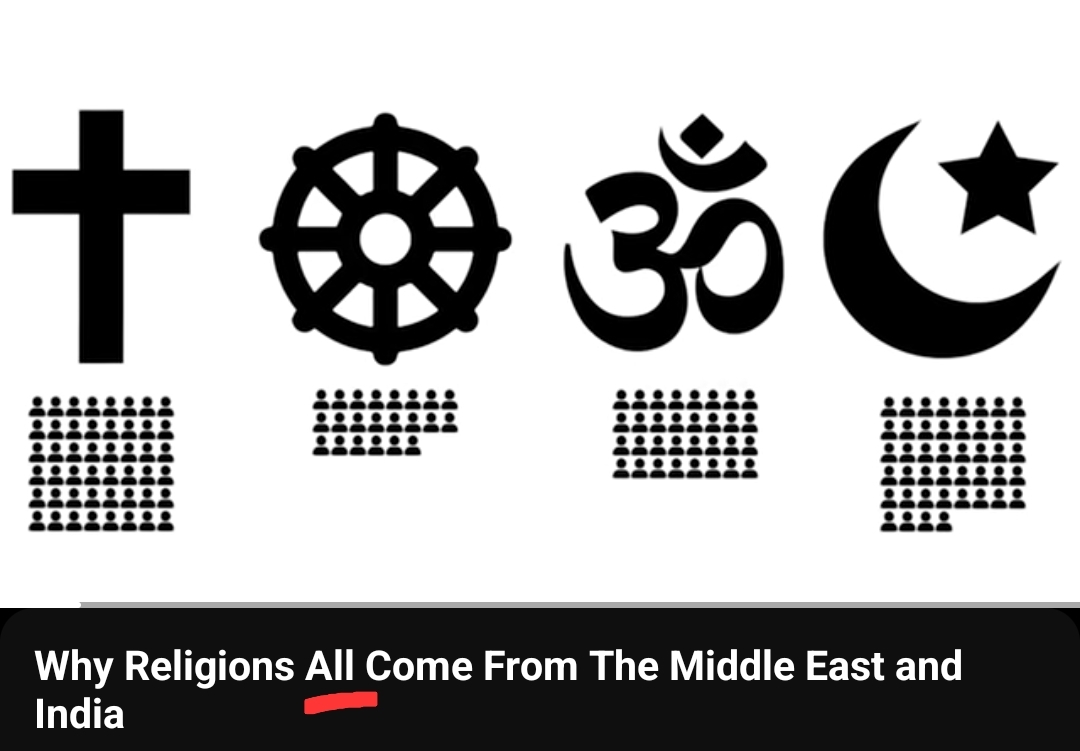
@Jack_Black you asked why one of the major tasks Jesus Christ will accomplish when He returns is destroying the Roman Catholic Church. Rome (and Islam) are the enemies of God’s children, the Jews and true Christians.

Why then, is there such a big overlap in both religions from Abraham (Ibrahim) to Muhammad (PBUH)? Is it a politicoreligious difference or a sociocultural issue between Islam and Judaism.. or Islam and Roman Catholicism? And Yes, they both have Jesus so where’s the difference to make them enemies?

I too, I’m a Christian.

Because Satan is a deceiver. How else could he gain a semblance of legitimacy? He took Christianity, switched up a couple of things and came up with a bastardized religion, called Islam, Roman Catholicism, and more.

Satan will never come to you as the devil. He appears as an angel to convince you that he’s sincere. He will quote the scriptures perfectly, show you how Islam “reveres” the prophets in the bible but pervert it just enough to maintain plausible deniability to the undiscerning soul.

“Beloved, do not believe every spirit, but test the spirits to see whether they are from God, for many false prophets have gone out into the world.” 1 John 4:1.

1 Like

So where did the Buddhists come from?

You are confused. The christians who were being persecuted by the Roman rulers were Catholics. And they were being persecuted for refusing to worship roman gods and instead worshiping Jesus Christ. St Peter, the First Pope, was also persecuted and crucified by the roman authorities. So why condemn the Catholic Church who were victimised for preaching the Gospel of Jesus Christ?

They were never Catholics! Did they practice liturgical worship or keep sacraments?

Did they believe in the Virgin Birth or Mary’s Assumption?

The Roman Inquisition of the 12th Century onwards is the same ideological structure which persecuted the early Christian church. It’s the same Roman institution which quietly rebranded from paganism to “Christianity” without ever apologizing for their evil deeds or renouncing of their man-made doctrines.

Persecution of the Catholic Church by Roman authorities

The early Catholic Church faced systematic persecution by Roman authorities because it challenged Roman religious and political norms. Despite brutal measures, Christianity survived, grew, and eventually became the dominant religion of the empire.

1. Context

  • Christianity began in the 1st century AD.
  • Early Christians refused to:
    • Worship Roman gods or the emperor.
    • Participate in traditional Roman religious rituals.
  • Romans saw this as political subversion and a threat to social order.

2. Reasons for Persecution

  1. Religious Exclusivity: Christians worshiped only one God and rejected Roman gods.
  2. Refusal to Honor the Emperor: Seen as treasonous since emperor worship was a sign of loyalty.
  3. Rapid Growth: Christianity spread quickly, alarming authorities.
  4. Misunderstandings: Rumors and misconceptions about Christian practices (e.g., Eucharist called “cannibalism”) fueled fear.

3. Major Persecutions

Emperor / Period Nature of Persecution Notes
Nero (54–68 AD) Blamed Christians for Great Fire of Rome (64 AD) Christians were crucified, burned, or thrown to beasts; Peter and Paul martyred.
Domitian (81–96 AD) Enforced imperial cult worship Targeted prominent Christians, including leaders.
Trajan (98–117 AD) Limited but systematic persecution Christians who refused to recant were executed.
Marcus Aurelius (161–180 AD) Localized persecutions Christians accused of atheism and subversion.
Decius (249–251 AD) Empire-wide persecution Required certificates of sacrifice to Roman gods; many martyred.
Valerian (253–260 AD) Executed bishops and priests Attempted to suppress Christian leadership.
Diocletian (303–311 AD) Great Persecution Churches destroyed, scriptures burned, Christians tortured; one of the harshest persecutions.

4. Forms of Persecution

  • Executions: Crucifixion, burning, being thrown to wild beasts in arenas.
  • Imprisonment and torture: To force renunciation of faith.
  • Confiscation of property: Churches and Christian homes were seized.
  • Social exclusion: Christians could not hold public office or participate in civil life.

5. Response of the Early Church

  • Christians remained faithful under persecution, often seeing martyrdom as a witness to faith.
  • Growth continued despite danger: persecution often strengthened the resolve of believers.
  • Secret meetings in catacombs and private homes became common.

6. End of Roman Persecution

  • Edict of Milan (313 AD): Issued by Emperor Constantine, legalized Christianity.
  • The Church went from a persecuted minority to an officially recognized and eventually state-supported religion in the Roman Empire.

You are uneducated on matters religion. For 1500 years, from the beginning of christianity, all christians in the world were Catholics and there was no other church until 1517 when Martin Luther, who was himself a Catholic priest, rebelled against the Catholic Church and formed the protestant movement. So yes the christians who were persecuted were Catholics.

Hehe … what does the Catholic Church have to do with this?
This Christianity that was heavily persecuted was legalized in 313 by Constantine, and it grew into the Catholic Church.
During the reign of Marcus Aurelius, Rome was pagan. From an objective point of view, Marcus Aurelius was justified in persecuting Christians because they were undermining the religious unity of the Empire, which was also political unity because church and state were the same. The Emperor was the chief priest (pontifex maximus) as well as the head of state. Remember also that germanic tribes were constantly trying to infiltrate the borders of the Empire and Marcus Aurelius spent most of his time fighting these battles. What patience would he have had with a bunch of upstarts undermining the religious unity of the state? This was one of Rome’s greatest emperors, a philosopher no less, yet even he did not hesitate to persecute christians.
Diocletian was also a great emperor. He implemented key reforms in the empire, enabling it to survive when it was almost collapsing. He also saw it fit to persecute christians, which he did very severely.
You need to place yourself in the time when these people lived. You too would have despised christians, people who were worshipping someone who had been crucified (most humiliating execution). Today, what would you think of a group worshipping someone who was hanged for criminal behavior and claiming he had resurrected and was the son of god? You would think they were crazy, which is exactly what teh Romans thought.

1 Like

Tell him. Blandina was executed in 179AD. It is the pagan Roman rulers who executed her not the Catholic church. The Catholic church itself was also under persecution by the roman authorities then with many Catholic bishops and priests being executed.

1 Like

So no Buddhism, then?

Do you know what Gengis Khan used to do in place of mass crucifixions, like the Romans? Yes, I know this name isn’t in either Testament, but stick with me here.

Buddhism might sound “noble” and “enlightened” on paper; but it doesn’t address the issue of original sin, which makes it a vacuous religion. As I have repeatedly told you, the devil is not in the business of selling pure darkness (although sometimes he does).

The bible warns that if it were possible, the very elect would be deceived. The subtleties manifest in myriad ways depending on culture, time period, fashion etc but watch how it is always the same vein: deception!

“Without shedding of blood is no remission of sins." Hebrews 9:22. Morality, positivity, purity rituals, chanting, all that can never forgive a sinner or reconcile him to His Maker.

Shedding innocent blood is not objectively wrong? Is there an absolute and who or what is it? The Roman Empire or God?

So basically, you are indoctrinated.

Shogun Ieyasu was also big on crucifixion of Shinto abandoners.

@Landlord The man who helped Jesus on the way to Golgotha was from Libya, a formerly prosperous African Nation before the Obama/Sarkozy joint operation. Mormonism meets moderate sufism (?)..

This is where you don’t get it. It was not innocent blood in their eyes. They disobeyed the Roman Gods and by so doing undermined the authority of the state. A sin was also automatically a crime. It was therefore the emperor’s duty to punish them. This is is one of the reasons why separation of church and state is important in the modern world. You can commit adultery with your neighbour’s wife and although @messiahette will tell you you’re going to hell, you can’t be charged in a court of law with the offence. A sin is not necessarily a crime.