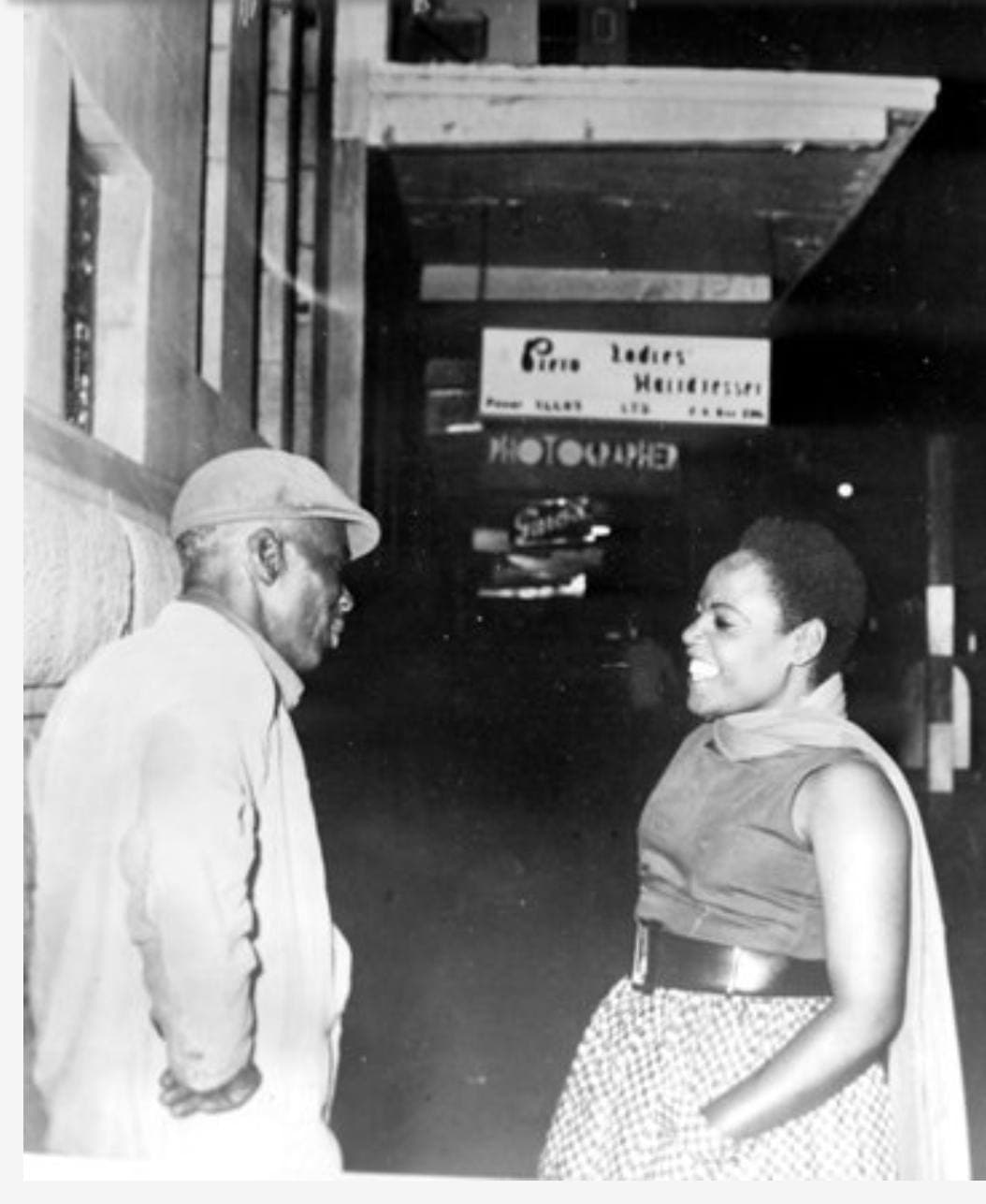
Photos of prostitution in Nairobi taken in 1962. There were three types of prostitution in the colonial Nairobi.
1)The Malaya type. The Malaya offered indoor domestic and sexual services. It was an arrangement that copied marriage, in that a man would visit a malaya’s crib where he would be treated to good food, sex, warm bath, emotional support and shelter.
At the end of the visit the lady would calculate the cost of all the services offered and bill the man. This was very common in Pumwani where the malaya owned a number of houses. Malaya were very rich from their illicit trade and owned houses as far as Kariobangi.
The second prostitution was Watembezi. Watembezi walked urban streets, frequented bars and hotel lobbies looking for customers. Watembezi were first observed in Nairobi in 1937, when girls between 14 and 15 years frequented the roundabout connecting River Rd and Quarry Road. The Watembezi were always harassed, arrested by the police and formally charged. Those below the age of 15 were never charged but returned to their rural areas.
To outsmart the authorities, the Watembezi always looked for employment as maids in European households. The hidden motive was to secure an employment letter. Using that letter she would then roam the streets of Nairobi looking for customers without the fear of being harassed since she could provide proof of her source of income as a maid in a European household.
In other words she worked as a maid to cover her real hustle of prostitution. Others registered as traders with the Municipal Council just to get a hawking license which would cover them from harassment.
Such licences and letters of employment enabled them to venture deep into the town in search of rich Asian or European men with cars. Watembezi could be found on Government Road , River Road and Eastleigh ninth street looking for customers.
The third form of prostitution was called Wazi-wazi. This form involved prostitutes sitting in front of their houses announcing their prices and calling out prices. It was also common in Eastleigh, Pumwani and Shauri Moyo.
Of all the three forms of prostitution Malaya was considered the safest. The most prominent invasion of the Nairobi CBD by the Malaya was in a building called Silver Building on Campos Ribeiro Avenue. This building was owned by Mangal Dass who rented it out to an African man at 250/- a month.
The African man being money oriented, sublet the rooms to many malaya who brought him a total monthly income of 850/-. The building was frequented by Europeans who just wanted to have nice time away from their families. Acting as pimps were rickshaw (something similar to mukokoteni) guys who can be equated to the present day bodaboda riders. They pulled passengers over short distances within Nairobi but also used the opportunity to recommend the best places for umalaya. At one point the government banned them from the CBD. One mukokoteni guy was even nicknamed “Kingi wa malaya” because he was very good at connecting malaya with the would-be-customers.
call girl
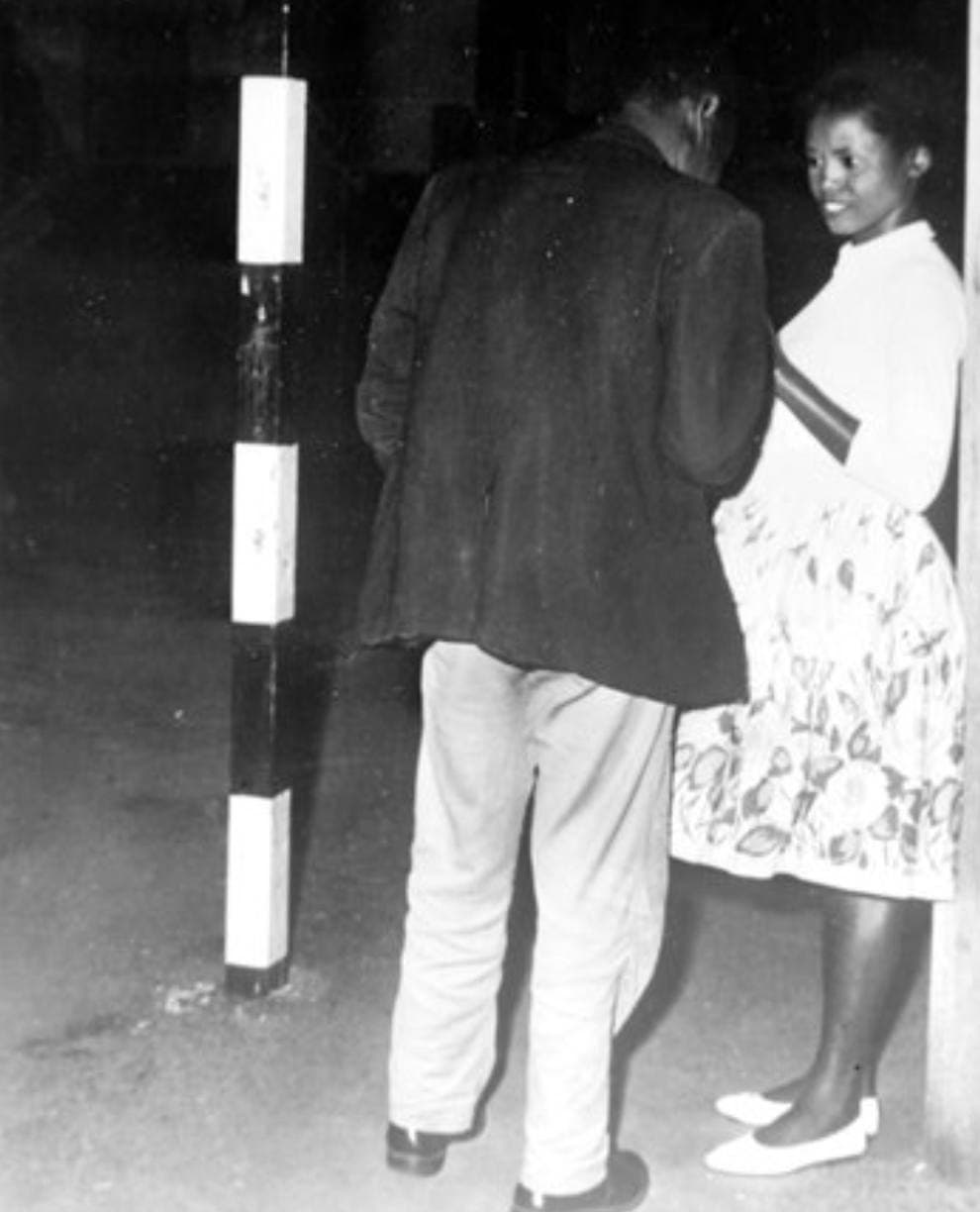
mtembezi

wazi wazi

 Core Message:
 Three Prostitution Archetypes in Colonial Nairobi:
 Notable Infrastructure:
 Support Network:
 Key Takeaways:
 Mikymas’ Underlying Point: