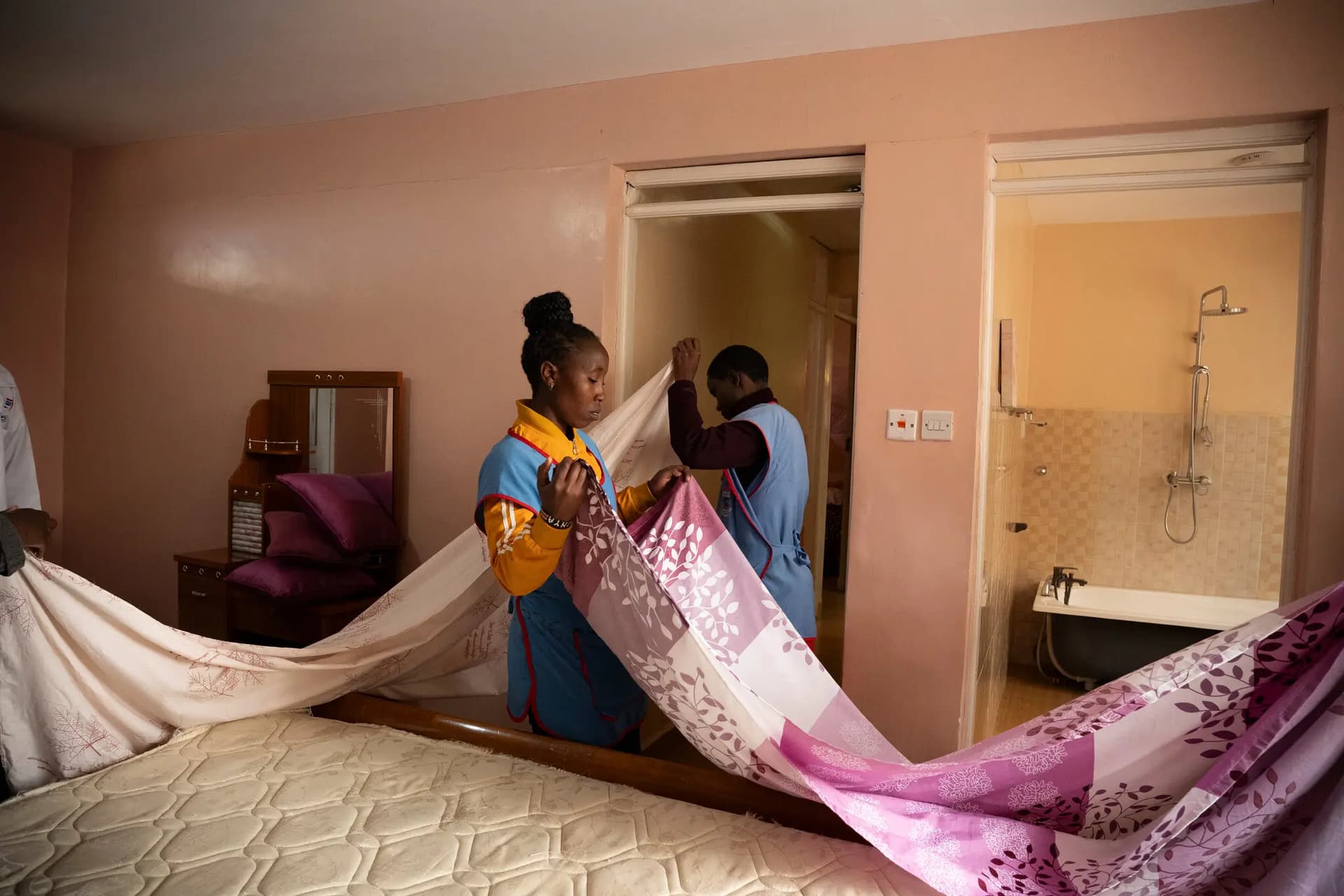
Recent investigative reports by The New York Times allege that the government of Kenyan President William Ruto has built an economic policy around exporting labor, and that members of his family, including his wife and daughter, profit from the staffing industry’s major insurance provider.
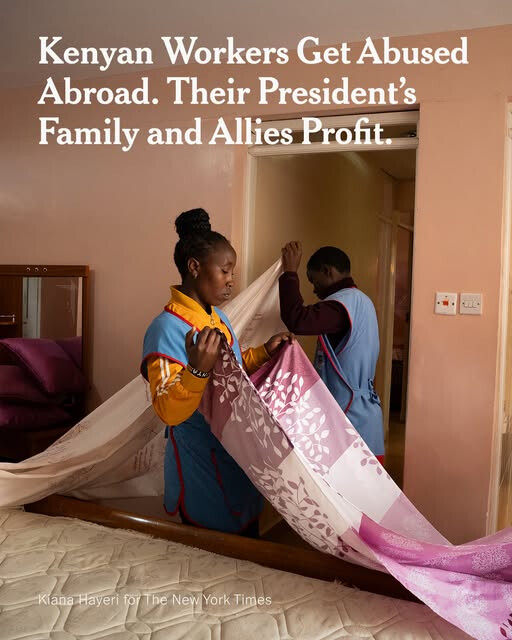
The government of President William Ruto of Kenya acts as an arm of a staffing industry that sends poor workers abroad in droves, and whose leaders compare women to dogs and blame them for their own abuse, a New York Times investigation found. https://nyti.ms/4pbJL1V
Key details from the reports:
- Government Policy: The Ruto government has positioned the export of workers as a key economic strategy, with the President often noting that remittances now account for a larger share of the economy than traditional exports like coffee and tea.
- Alleged Corruption and Abuse: The investigation claims that the government acts as an “arm of a staffing industry” that sends poor workers abroad, primarily to the Gulf region. The reports also highlight a lack of government effort to secure stronger protections for these workers, who are often subjected to abuse and paid less than workers from other countries.
- Family Profit: The reports specifically state that President Ruto’s wife and daughter are the largest shareholders of an insurance company that is a major player in the labor export industry.
- Official Response: The government has not directly addressed the allegations of the Ruto family’s financial ties, but officials have generally played down clear evidence of worker abuse and consider questions about mistreatment as obstacles to the President’s economic goals.
These findings have generated significant discussion and criticism on social media platforms, with many people using the reports as evidence that the President is prioritizing personal and family profit over the welfare of Kenyan citizens working abroad.