 ( Raphael Tuju )
Legally, Morally, and Ethically: This is a Predatory Seizure
The situation facing Raphael Tuju is not a standard debt recovery; it is a textbook case of economic strangulation and a calculated land grab.
The Ploy: How the “Trap” Was Set
This was never a simple loan. It was a setup designed to swallow a lifetime of work.
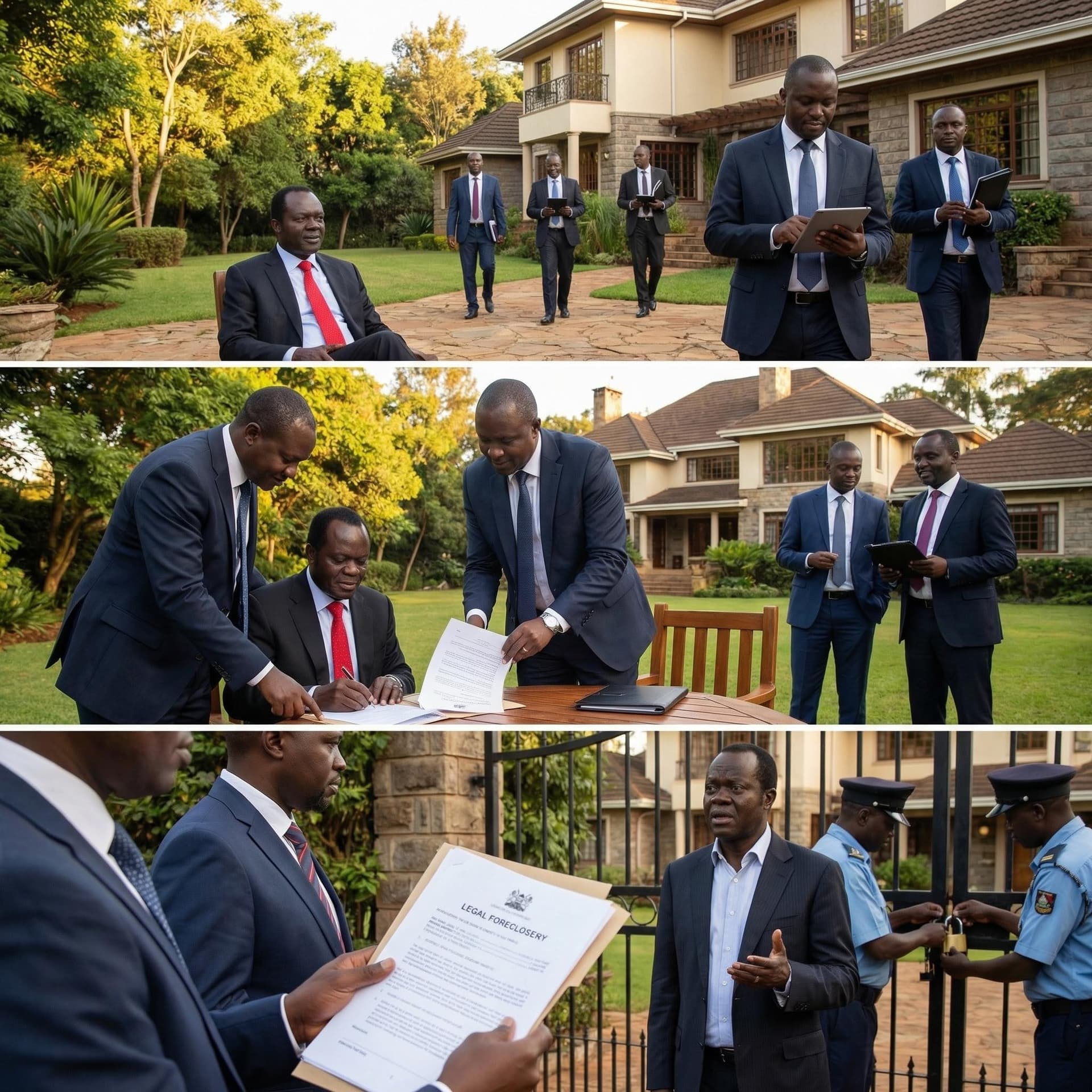
• The “Bait”: The East African Development Bank (EADB) approached Tuju, not the other way around. They enticed him with a “development” deal to expand his vision for a forest sanctuary.
• The “Hook”: To get the loan for the new Tree Lane (Entim Sidai) property, the bank forced Tuju to put up his pre-existing, debt-free assets as security—specifically his private residence on Mwitu Road and the thriving Dari Business Park. These were neighboring properties in the Karen “Golden Triangle” that Tuju owned 100% long before this bank ever entered the picture.
• The “Breach”: Once the bank had their “hook” into his old properties, they intentionally withheld the second installment of the loan ($2.9M). As a senior bank manager admitted in court, they knew the project could not survive without those funds. You cannot sell houses that the bank won’t let you build.
The “Coveted” Assets
This wasn’t an accident; it was a map to a “Trophy Estate.” By intentionally starving the new project of funds, the bank triggered a “default” that gave them the legal right to seize everything—the old land, the family home, and the restaurant. They are using a $9M loan to seize an estate now valued at over $35M (KSh 4.5B). They don’t want the money; they want the land.
The Moral Decay: Banks as “Loan Sharks” 
If the Judiciary allows banks to act like Loan Sharks (the modern-day “Shylocks”), our financial institutions have gone rogue. When a “Development Bank” uses the law to predate on its clients rather than partner with them, we are living in a lawless country where the “Sanctity of Contract” is used as a weapon to:
• Predate on the dreams of entrepreneurs.
• Covet the properties of their clients through engineered defaults.
• Sabotage the very projects they were meant to fund.
If the judiciary gives permission to these institutions to predate upon and covet their clients’ property through “technicalities,” then no property owner in Kenya is safe. We will not even be able to question these sharks because the courts have handed them the keys to our heritage.
A Call for Ethics in the Judiciary
We must call upon the Judiciary to bring morals and ethics back to our country. The law without ethics is merely a tool for the powerful to steal from the industrious.
On Tuesday, March 17, our courts have a choice: Will they be a shield for the people, or a hammer for the sharks? We are not just fighting for Raphael Tuju; we are fighting to ensure that our financial system does not lose its soul.
copied